
How D.W. Bradley's CyberMage: Darklight Awakening Invented Netflix


In 1994, Origin Systems recognized that they needed to cash in on the nascent first person shooter craze. For roughly a decade, Origin had been the star of the game development pantheon, known for pushing the limits of technology and making cutting edge games that had no comparison. The long running Ultima series had established the company's street cred and the surprising success of Wing Commander had made their mark legendary.
Now, that was changing. Young upstart Id Software's DooM had set the world on fire and everyone in the industry was racing to follow it up. Origin, now a corporate subsidiary of Electronic Arts, was starting to seem stodgy in comparison. DooM grew the PC gaming audience in leaps and bounds and at the same time conditioned them to expect a new kind of game. What specifically made DooM magic? The snappy gameplay, the clever level design, the aesthetic and its ultraviolence, the sheer pick-up-and-play simplicity, the first-one's-free shareware release model? No one knew for sure but everyone thought they had an answer.
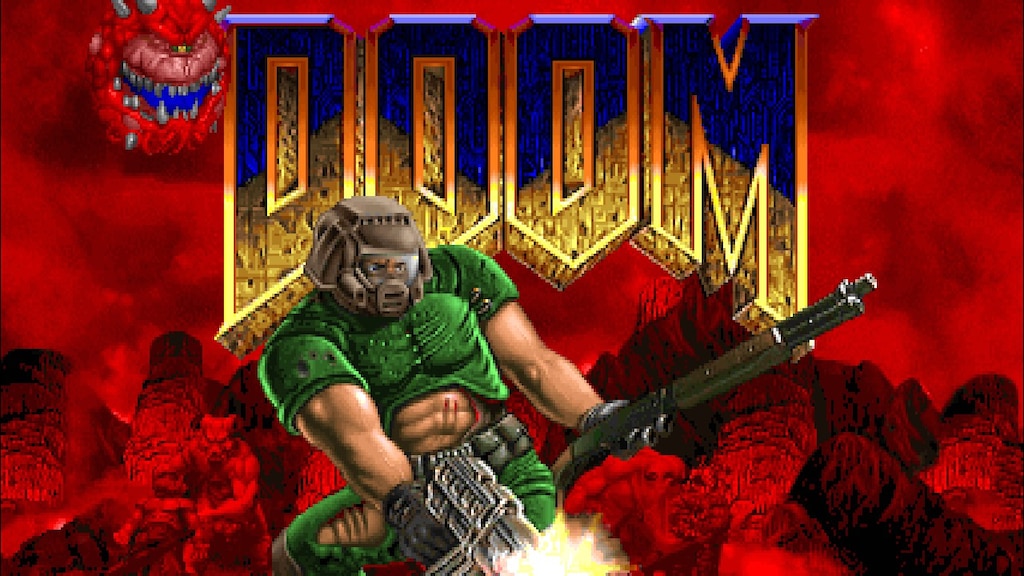
But even in 1994 the idea of a "DooM clone" had already become established as a net negative for selling your game. A DooM-inspired game needed to bring something unique to the table or it would disappear into the morass of hundreds of similar games already starting to flood the market. If Origin wanted to carve out their own part of the FPS pie they would have to come up with a gimmick, something that set it apart from the likes of DooM and Heretic. Confusingly, Origin's answer to DooM would have two wholly separate gimmicks. For the first, Origin brought in a celebrity game designer: David W. Bradley. Bradley had been responsible for some of the high points of the famed Wizardry series of RPGs, close competitors to Origin's own Ultima. Bradley left Sir-Tech in 1994 in a dispute over royalties and Origin was eager to bring him into the fold. Bradley would be credited for both the design and the writing on the game.

The second gimmick was about fifteen years ahead of its time: instead of demons from hell or medieval knights, the game would feature superheroes. You would play a character who not only fired shotguns and rocket launchers but also magic spells and the like. The game's aesthetic would be patterned after the indie superhero comics that were incredibly popular at the time. The clear hope was that this wouldn't seem like a copy of DooM but a totally new sort of game simply inspired by DooM's mechanics.
The result of all this was July 1995's CyberMage: Darklight Awakening, one of Origin's least remembered games. To its credit, CyberMage is a fine game and it does a lot of things very well, the least among them introducing the kind of interactivity and storytelling that would establish Half Life as DooM's true heir a few years later. But it entered a market full of DooM clones and despite an expensive marketing campaign it failed to do numbers. CyberMage isn't so much forgotten as it was never experienced in the first place. At the risk of editorializing, despite the quality of the game the entire effort came off as trying too hard, the sort of thing that's decided by committee rather than representing some artist's vision.
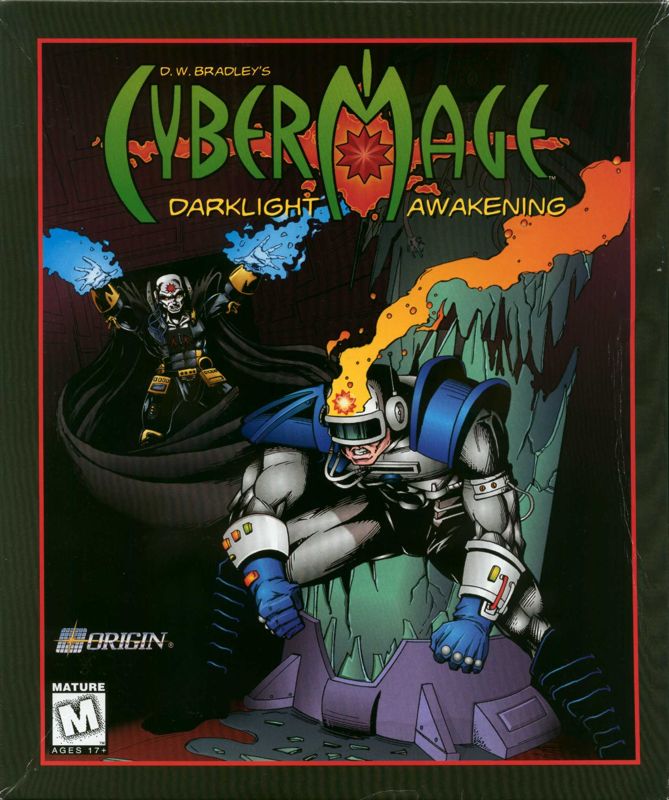
But back to that gimmick: as part of CyberMage's very expensive rollout, it was decided there should be a real comic book to go along with the game. In the tradition of feelies like Ultima's runes and Wing Commander's blueprints, CyberMage would ship with a full length, full color comic book: CyberMage #1. And it did! The art is excellent,the dialogue is good, the story is… the story of CyberMage… and at the end of the day it's a quality piece of packaging from people that clearly did care about their project. Origin's creative services group under the legendary David Ladyman did not miss.
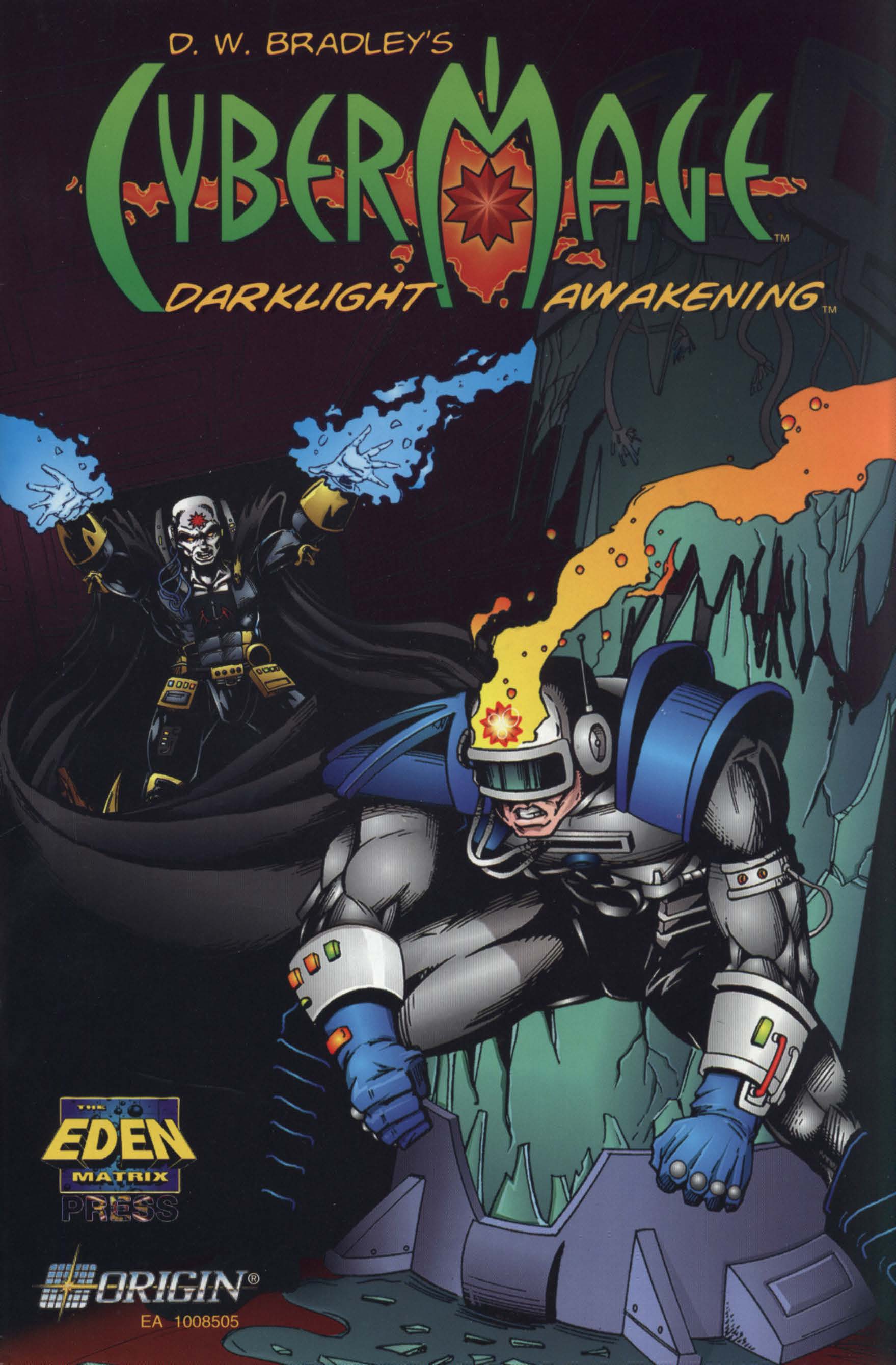

This is where our mystery starts. The final page of the comic book promises you that CyberMage #2 is coming soon:

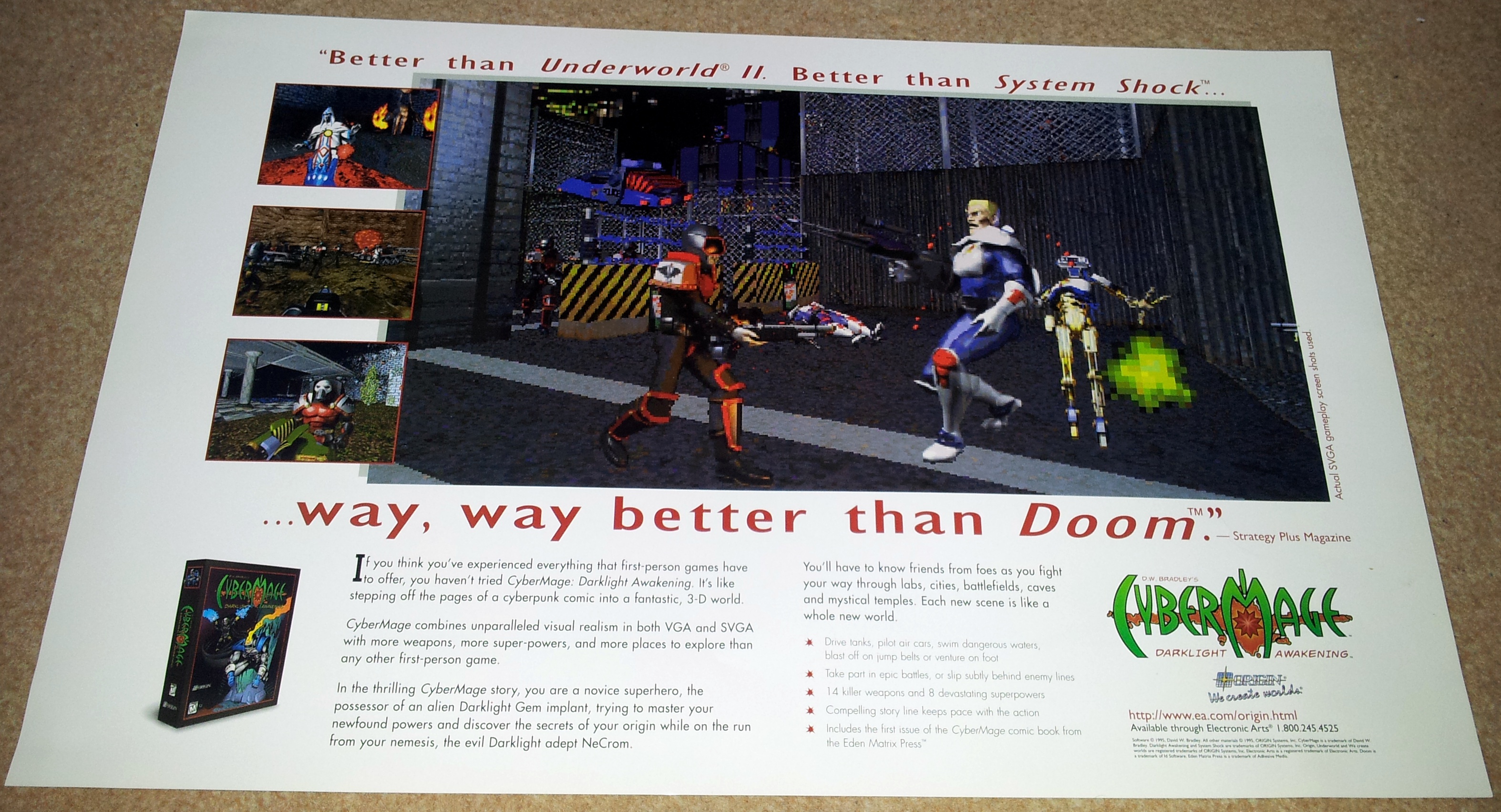
In fact, Origin's marketing played heavily into the point that there would be a real CyberMage comic from "Eden Matrix Press" alongside the game. It was mentioned in magazine advertisements, interviews about the game and so on.

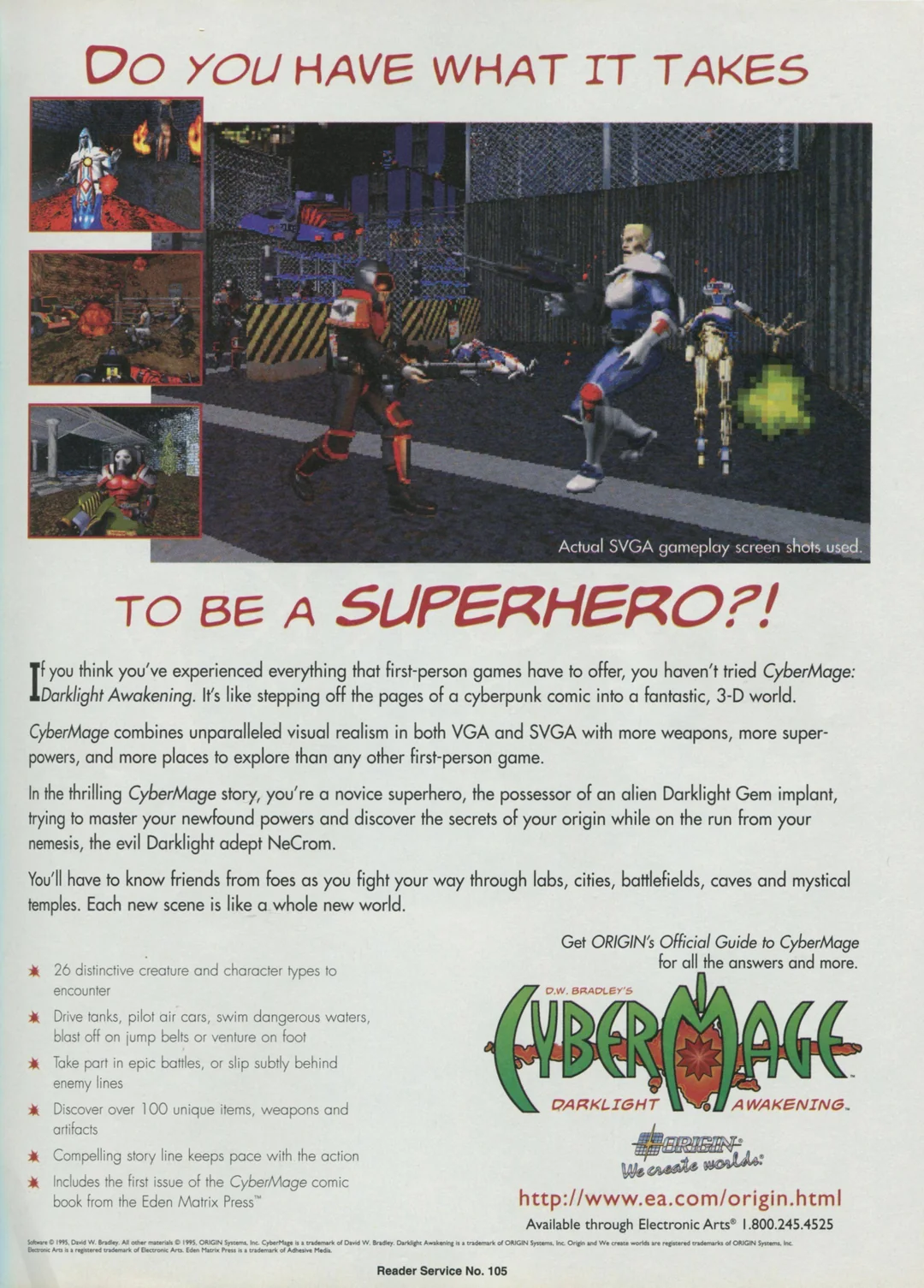
But there was no issue 2. And there is no record of "Eden Matrix Press" ever publishing a single comic beyond the one included in the box. It was never available on its own in stores and nothing indicating that a second issue was ever solicited has been found to exist. So why does a publishing label exist for what is effectively a manual printed by Electronic Arts just like Victory Streak or Voices of War?
It turns out there's a little bit more to the story. While searching for "Eden Matrix" and comic I made a pretty surprising discovery: a series of comics published in 1994 by Adhesive Comics named Eden Matrix. What's more, their logo is identical to the Eden Matrix Press logo included with the CyberMage material! The credits for Eden Matrix the comic book are to the same people credited with CyberMage #1, Aubrey McAuley and Ashley Underwood. What's going on here?
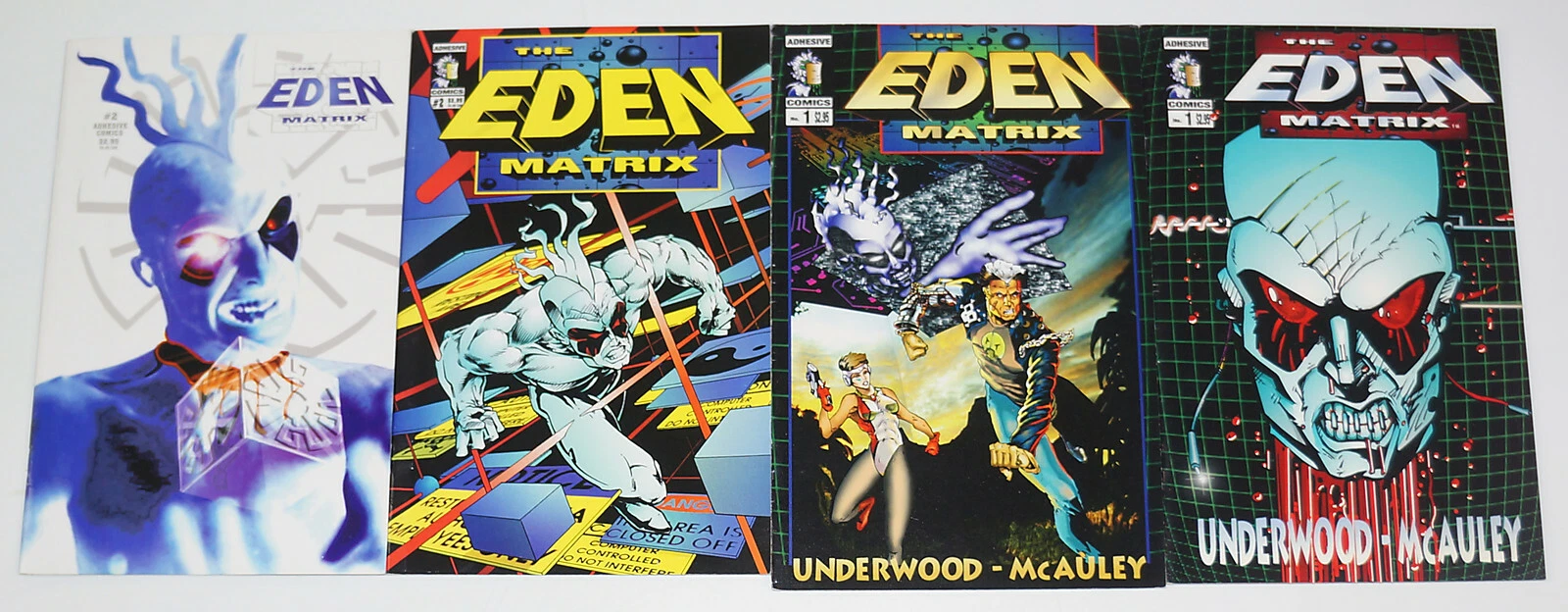
Adhesive Media was an Austin-based small press comic published started by the person behind 90s indie classic Too Much Coffee Man. They published a number of short runs of comics by members of Austin's artsy counter-culture. And their story is a little crazy because, specifically, of this Eden Matrix comic.
Eden Matrix (the comic) had its own unusual gimmick: if you were a big fan of the comic there was a special BBS you could call to interact with fans and access bonus materials. The BBS quickly became very popular not because people loved the comic but because it had a pipe to the newly popular world wide web. In a story straight out of Halt and Catch Fire, the Eden Matrix BBS transitioned into becoming one of Austin's biggest local internet service providers!

If Eden Matrix is forgotten today it's probably because Austin had another legendary local ISP that's even more closely connected to Origin: Illuminati Online, or IO. IO was founded by Steve Jackson and represented the same chunk of Austin nerd culture as Origin (they would go on to provide Origin's corporate internet in the late 90s; back in the day we'd track "io" IP addresses on wcnews so we'd know when Origin was looking at Wing Commander). IO was Eden Matrix's number one competitor, though they would both fall to national ISPs in the long run.


Eden Matrix was a spit-and-glue operation that wasn't afraid to take crazy risks on the future, presumably owing to how they came to be in the first place. Eden Matrix Press, officially a trademark of Adhesive Media, was an aborted attempt to return to comics around the launch of CyberMage. It was apparent CyberMage wasn't going to be a hit immediately and the project was dropped.
… but the sort of thing it was dropped in favor of was pretty incredible. Eden Matrix has one big claim to history: they streamed the first theatrical film on the internet! In June 1995, roughly six weeks before CyberMage shipped, Eden Matrix partnered with another tech company to stream the movie Party Girl live from a screening in Seattle. So if you think about the Wright Brothers when you fly an airliner today you should think about CyberMage every time you stream a movie!

(An aside: there is also a black and white 'ashcan' version of CyberMage #1. Origin wanted to emulate DooM's viral shareware release by making a similar version of CyberMage available. However, instead of releasing a chunk of the game online they opted to sell a demo version on CD in stores. For roughly $15 you could play the first level of the game and you would get a comic book. Origin's marketing was not beating the out-of-touch accusations!)
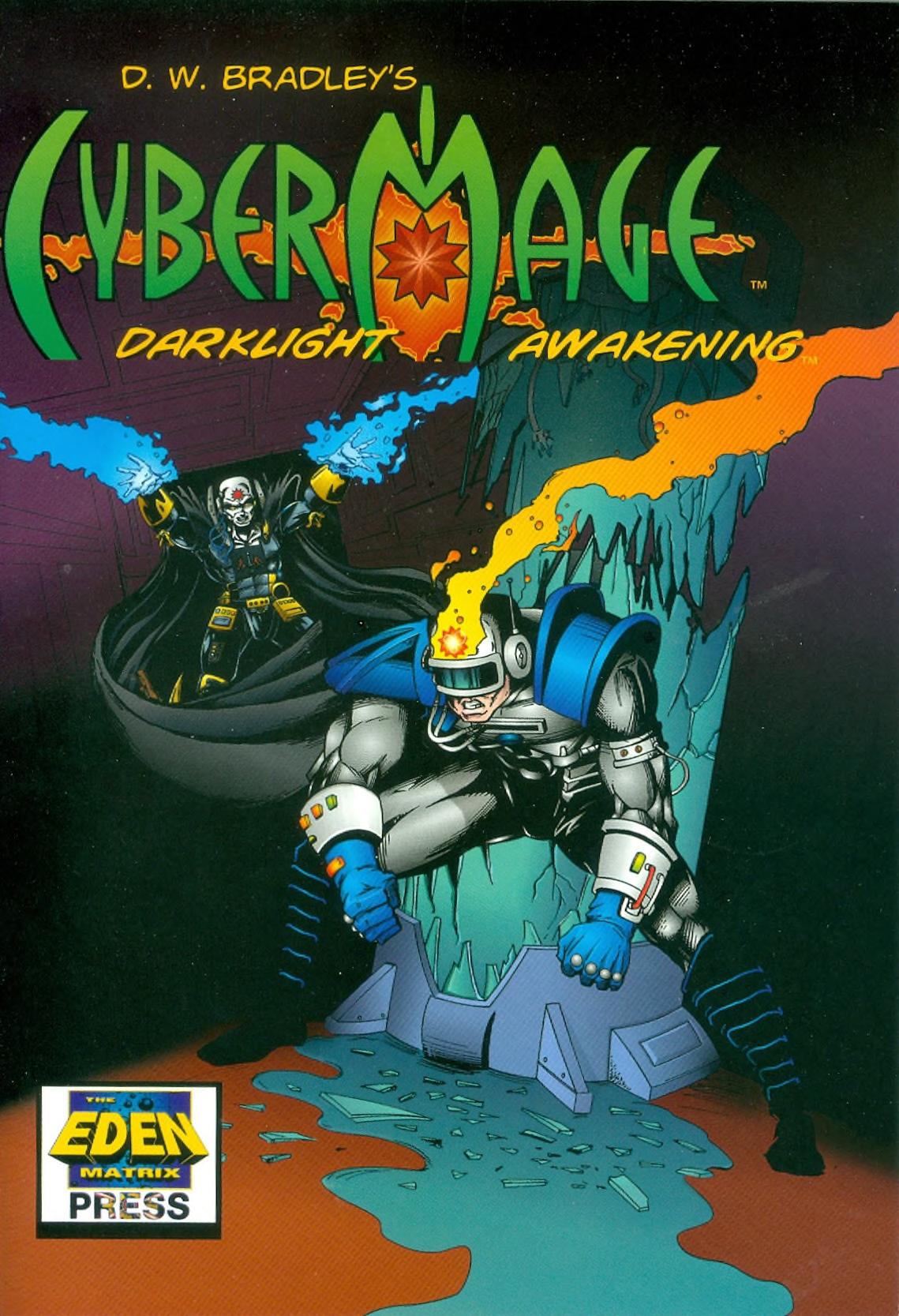

You can read the CyberMage comic here or the ashcan version here. A 1996 version of Eden Matrix's website is available on the Internet Archive.











Follow or Contact Us