
WC vs. History: Torpedoes A Way


On 2634.155, Crown Prince Gilkarg, the Barons of the eight noble clans and the heads of several claw fleets gathered to observe the first demonstration of a ship-killed torpedo. The test went flawlessly, an Asjaka bomber destroyed a Butha-class cruiser in a single strike, and the secret weapon that would allow the Empire of Kilrah to begin a war which would be fought on a scale unlike any before it was in place. The germ of the torpedo concept, however, belonged to Kilrah's impending foe. The Terran Confederation first demonstrated the concept in 2622, during the Panama system war games. There, the Blue admiral succesfully sank all ten of his opponent's battlewagons using a simulated fighter-based weapon capable of penetrating shields. The move was disqualified and its success was classified; the win went to Red team. Nevertheless, key figures took note and whispers of the potential behind the weapon would find their way to the highest echelons of the Empire as a new war strategy was being developed to combat the powerful Confederation Navy.
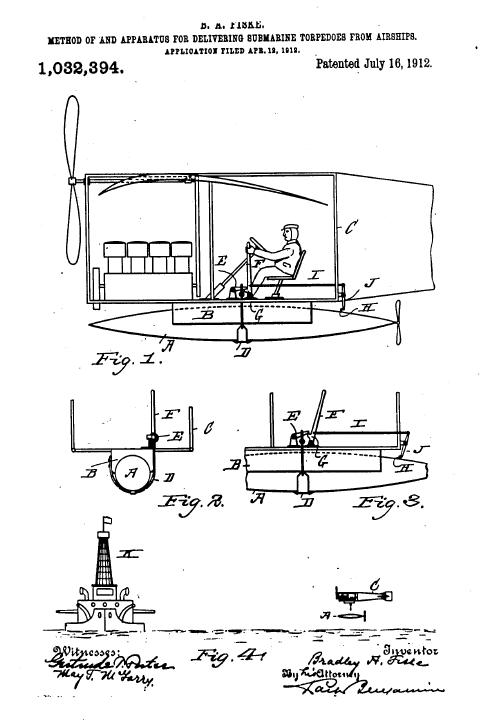
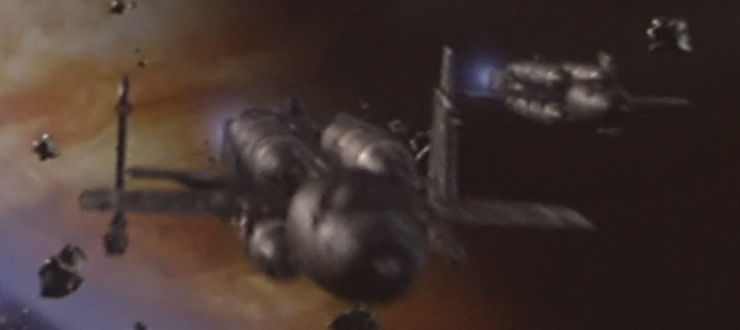
Diagram 1 from US Patent 1,032,394 showing Admiral Fiske's Method Of and Apparatus For delivering an aerial torpedo and a CF-131 Broadsword bomber with external antimatter torpedoes.
Both sides developed the technology in the pre-war period, although the Confederation efforts were limited. Prototypes were designed, but no method to counteract changing shield modulations could be determined. The Kilrathi, or rather their army of Varni slaves working under threat to their families, solved the issue. And on Confederation Day, 2634 the potential of the torpedo was proven in combat and the future of space-based carrier warfare was assured. Yet the successful strike at McAuliffe was also the beginning of the end for Kilrathi technological superiority. A Kilrathi torpedo hit the TCS Concordia but failed to detonate, a slave-installed firing mechanism link having been put in upside down. Within hours the weapon had been scanned and in just three months the Confederation was producing their own rough parity ship-killers.
The standard torpedo requires a difficult locking period, up to thirty seconds depending on the type, while it determines a capital ship's shield frequency. In the original Kilrathi weapons, a fighter had to stop completely to fire the weapon. This limitation was soon worked out, but treacherous "torpedo runs" would be among the most difficult missions flown throughout the war. Bomber turrets and fighter escort tactics improved across the conflict--as did the defensive weaponry on capital ships, ranging from turrets to rapid fire flak cannons to anti-torpedo flechette batteries. The more powerful Mark IV and V torpedoes (ten meter long weapons) traditionally carried antimatter warheads; others would carry less powerful fusion or proton packs.

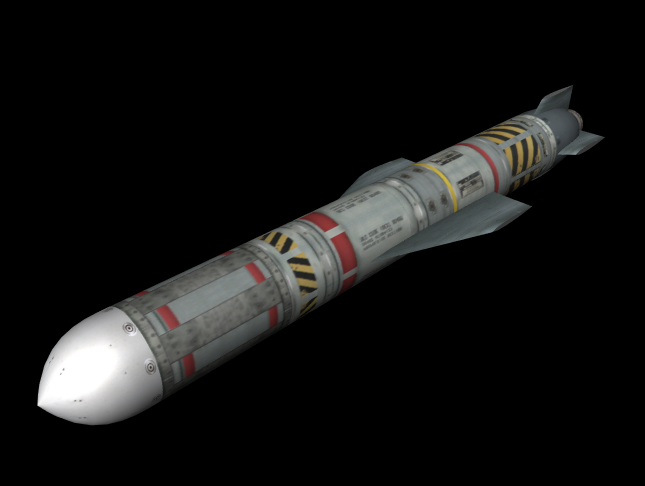
A Type 93 "Long Lance" Torpedo measuring 9 meters long and carrying a thousand pound warhead alongside a Mark IV torpedo with a fusion warhead.
The story of the war, or any war, involved a continued cycle between advances in offensive and defensive technologies. As fighter-capable weapons became more powerful, shield technology would react with a new system. This cycle occurred at least twice during the conflict. In 2648, the development of Meson Shields, replacing the original Phase Shields, meant that torpedoes would again become a necessity. Within six years, guns and missiles had caught up. Then, the opening roles of the war would be reversed in the heydey of the Enigma Campaign. After the Kilrathi premiered a new type of Advanced Phase Shielding, seemingly capable of preventing all fighter-based strikes for the duration, Confederation scientists designed an even more advanced type of torpedo locking system. Antimatter torpedoes could again penetrate enemy shields--and Kilrathi spies quickly leaked the weapons back to the Empire. The only change in the equation in the 2660s was that production of the newer mechanisms was more difficult; Confederation pilots were advised to preserve munitions as much as possible because of their rarity. By the last years of the war, torpedo technology had again fallen back, with more powerful guns and missiles developed to knock down APS systems.
Torpedoes continued to cycle after the war. In 2673, shield technology premiered on the TCS Vesuvius again prevented the use of guns and missiles. When the Nephilim invaded in 2681, damage could initially only be inflicted on their ships by torpedoes. A testament to the speed at which weapons technology evolves is the fact that the standard torpedo and light torpedo were already replaced with enhanced versions by the time the Midway arrived at Kilrah. And as that war went on, torpedoes underwent an unexpected sea change, from complex weapons requiring a lock to a mix between the form factor of the original weapons and the functionality of the civilian-grade "Proton torpedoes" which had been a cheap armament used by Privateers since at least the late sixties. By 2790, torpedoes behaved much like ordinary missiles--still locking, but with a much larger payload.

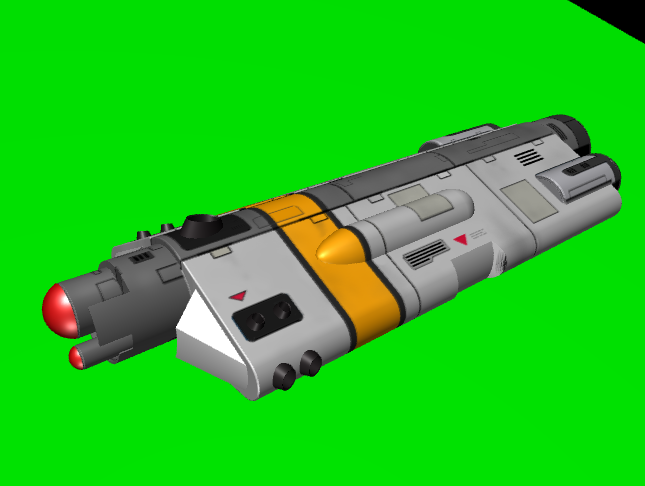
An American Mark 13 torpedo with plywood nose and tail sections and a post-war "Firestorm" Torpedo.
The man who first conceptualized the aerial torpedo was Rear Admiral Bradley Allen Fiske of the United States Navy. He received US Patent 1,032,394 on July 16, 1912 for a “Method of and Apparatus for Delivering Submarine Torpedoes from Airships.” In the patent he lays out the foundation mounting the torpedo and an interesting method of delivery. He proposed that torpedo planes would approach their targets from several thousand feet and then spiral down to the water when they were close to them and then release their weapons. He recommended this method because he believed it would help the strike planes survive any anti-aircraft fire sent up by a naval vessel. The concept of dive bombing, first exercised by the US Marines Corps in 1919, used this approach for accuracy, but it gave the advantage that Fiske sort for torpedo craft.
The concept of the aerial torpedo even made the New York Times on July 23, 1915 entitled “TORPEDO BOAT THAT FLIES. – Admiral Fiske Invents a Craft to Attack Fleets in Harbors.” It discusses Fiske’s ideas about dropping naval torpedoes from airplanes and attacking protected harbors with the same. While Fiske had thought of the aerial concept, executing it was far more difficult.
Naval torpedoes are complex machines. The successful operation of several systems is required for a torpedo to run “hot and true.” During World War I the lower airspeed of aircraft allowed torpedoes to have a fairly gentle entry into the water not much different from being launched from a ship. The first aerial torpedo mission was conducted by British Flight Commander Charles H. K. Edmonds on August 12, 1915 when he sank a Turkish supply ship. A handful more torpedo missions were conducted before the end of the war in 1918 with mixed results.
The United States Navy began testing aerial dropped torpedoes armed with dummy warheads in 1917. The first American torpedo drop was not a success. Instead of entering the water, the torpedo bounced off the surface and barely missed hitting the plane that dropped it. It was a portent of failures to come for American torpedoes.
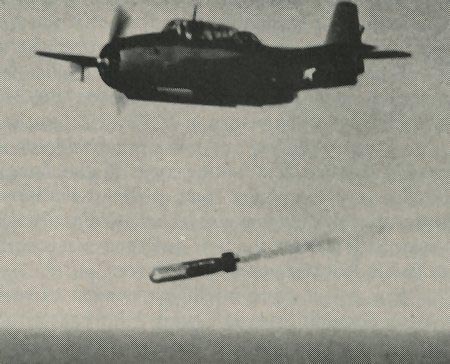
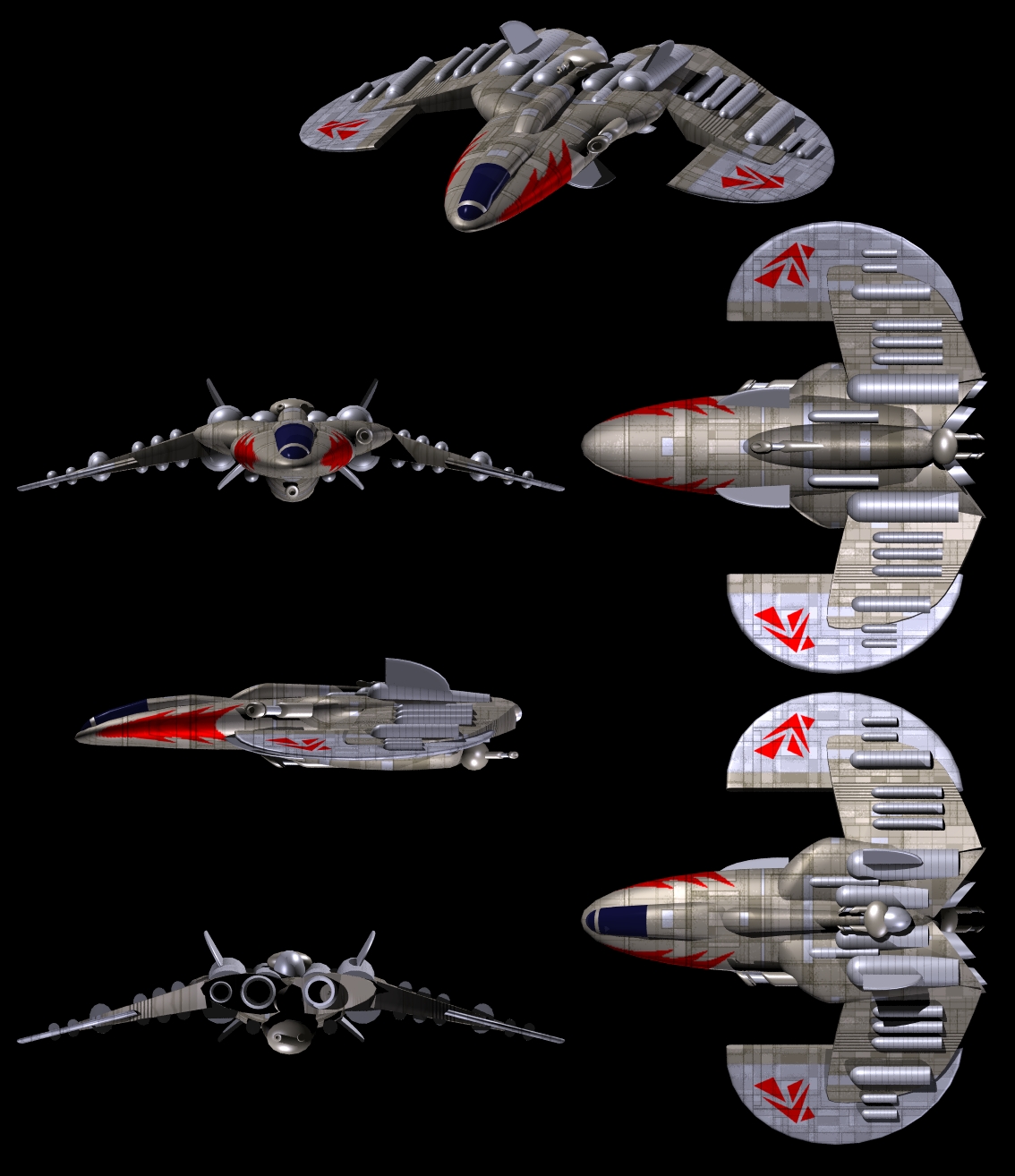
A Grumman TBF Avenger Torpedo Bomber dropping a Mark 13 from its internal bomb bay and the Kilrathi Gothri heavy fighter could carry six ship killer torpedoes, a record at the time.
Admiral Fiske received US Patent 1,379,972 on May 31, 1921. This patent was for a purpose-built aerial torpedo, mounting it onto an aircraft and a method of delivering it to a target. The spiral maneuver was dropped instead for steep dive from 6,000 feet, releasing the torpedo at 1,500 yards from the target. Upon entering the water, the torpedo would dive to a preset depth and cruise towards the target at 35 miles per hour.
Several months later, at the behest of General “Billy” Mitchell, the United States military held aerial attack demonstrations off the Virginia Capes in 1921. The sinking of the Ostfriesland on July 20 was the highlight of the demonstrations, however the Navy also conducted torpedo runs, again armed with dummy warheads, against a formation of US battleships traveling at battle speed. The torpedo planes scored well in the exercise although the results were inconclusive as to true damage potential of the weapons.
The United States began development of a purpose-built aerial torpedo starting in 1925. After many false starts the project eventually produced the infamous Mark 13 torpedo in 1935. The lean budgets of the interwar years, in particular those of the Great Depression, the US Navy did not test torpedoes with live warheads and detonators because of the expense of each torpedo. Because of this, the United States would not learn of major defects with the detonators on its torpedoes until World War II and even then it would not be until 1943 that the problems were truly rectified.
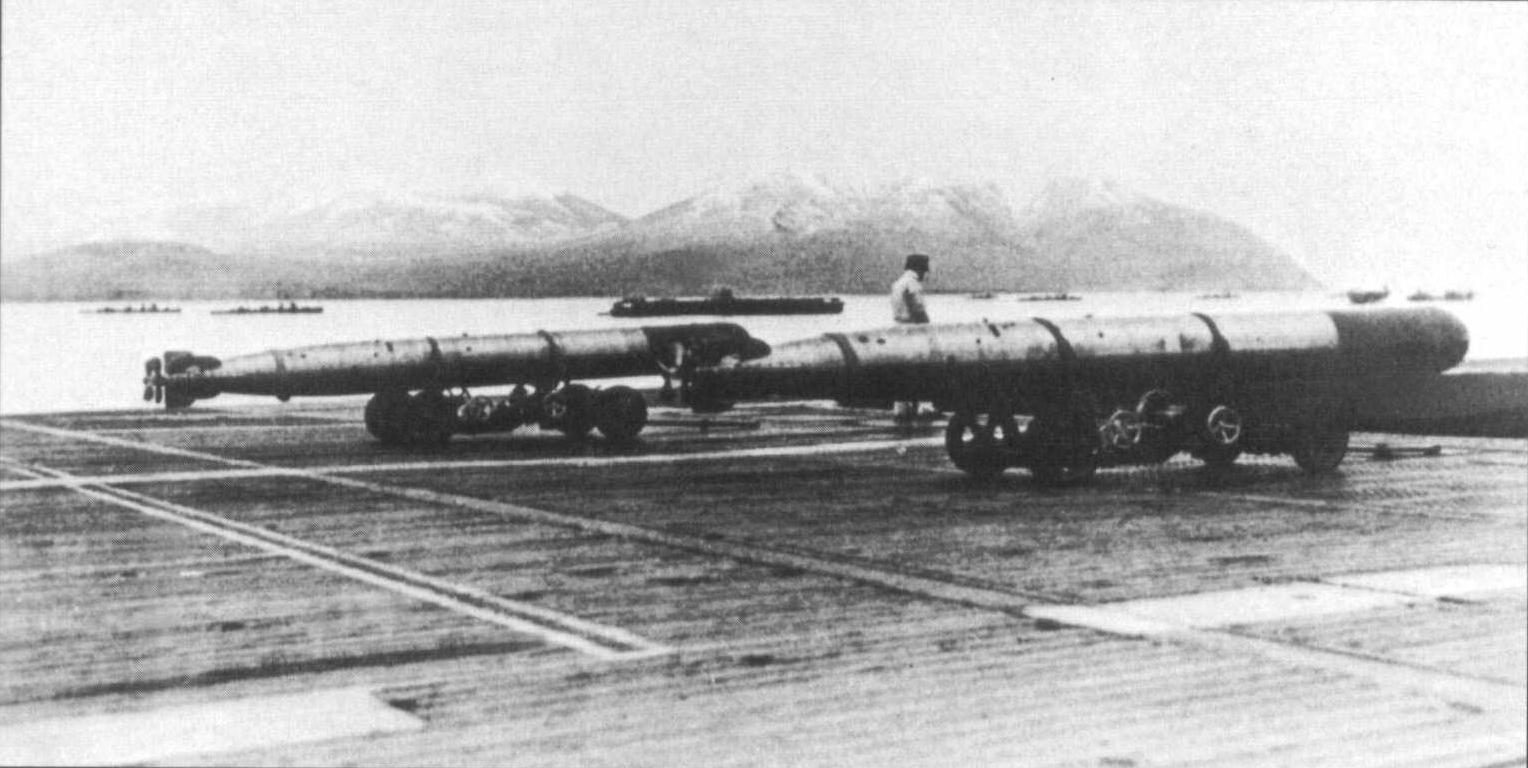
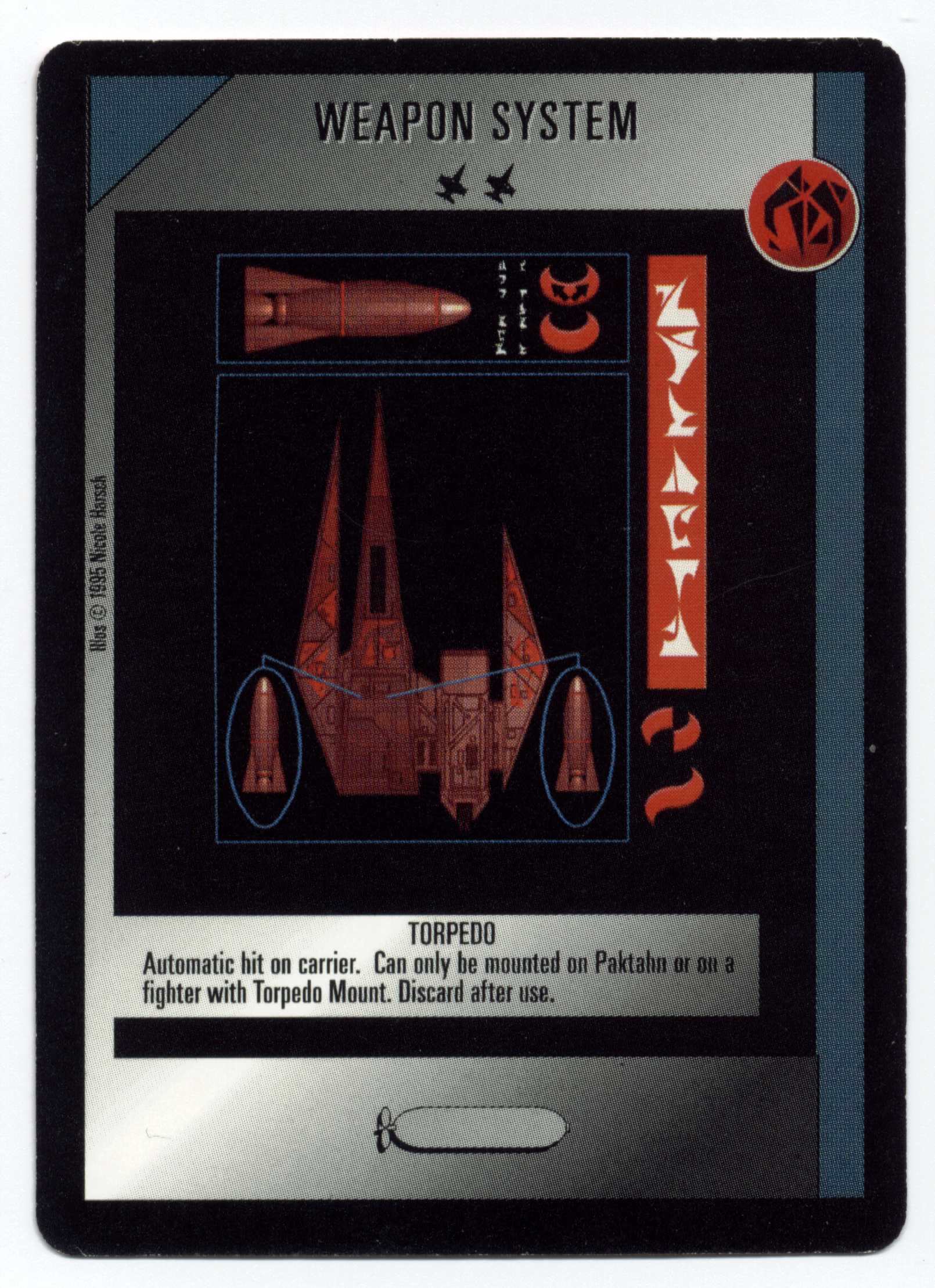
Japanese Type 91 aerial torpedoes on loading carts and a loading screen for a Kilrathi torpedo.
The Imperial Japanese Navy produced the world’s greatest torpedo of the time in the Type 93 “Long Lance.” This weapon earned a well-deserved reputation as a ship-killer during World War II. Its ability to inflict massive damage, at long range, while traveling at high speeds and not leaving a wake. Throughout the war, the Type 93 was unsurpassed by any of the world’s navies. The Japanese also produced an aerial equivalent in the Type 91 torpedo. The Type 91 was an extremely effective weapon that claimed numerous Allied ships during the war and inflicted a great deal of damage on a great deal more ships including a large number of carriers. It was on the Type 91 that the first wooden tail sections were installed to provide stabilization during flight into the water where they would then break away in 1936. Later wooden nosecones would also be installed to allow higher release speeds from the torpedo bombers. Both navies would make the use of wooden nose and tail sections standard practice during the war allowing for both higher speeds and release altitude. This gave the torpedo bombers a higher chance of survival in the face of the CAP fighters and the heavy volume of anti-aircraft fire put up by a naval task force.
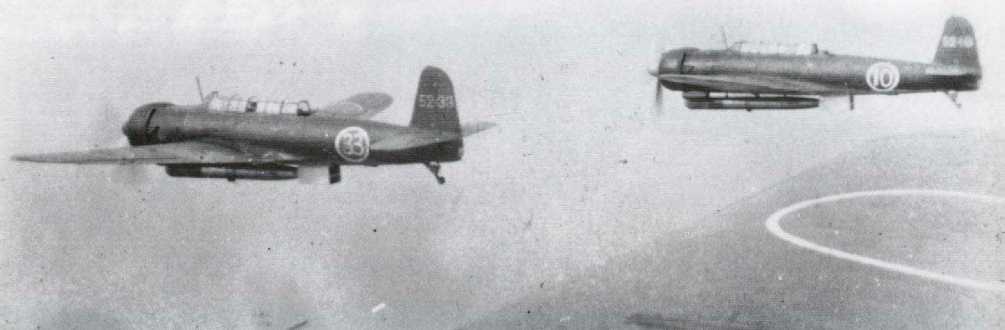
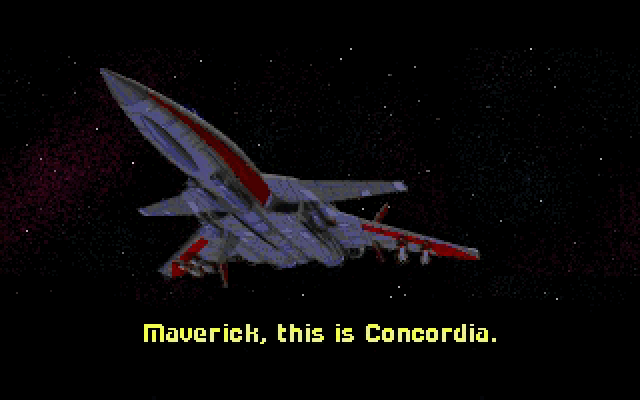
Nakajima B6N2 Tenzan (Allied codename: Jill) carrying Type 91 aerial torpedoes and external torpedo hardpoints are visible on one of the war's most advanced fighters.





Follow or Contact Us