
Moron Writes Article


The Digital Antiquarian is back with another article about the history of Chris Roberts' career, this time ostensibly covering the founding of Digital Anvil and the making of the Wing Commander movie.
We've reported on these articles in the past with little commentary. This time, though, I want to stress that these articles are incredibly misleading. They are poorly researched blog entries built around an incredibly inappropriate bias. Their entire gimmick is that they attempt to mimic the form and tone of academic writing without any of the necessary rigor. Anyone familiar with the subjects being discussed (this is not limited to the Wing Commander pieces) pretty quickly recognizes how they work: they cap a generally uninteresting personal review with a lengthy rewrite of someone else's article that takes every opportunity to intentionally twist meanings towards whatever personal narrative the author has decided to trace, seemingly from whole cloth, on top of it. In the case of Wing Commander, the Digital Antiquarian is certain that Chris Roberts is both a fool who has failed upwards his entire career and that he is a sinister shadowy figure that has been simultaneously plotting something awful that whole time. Everything that he has ever said or done somehow speaks to these two theories, no matter how innocuous those things might seem to a less conspiratorial brain.
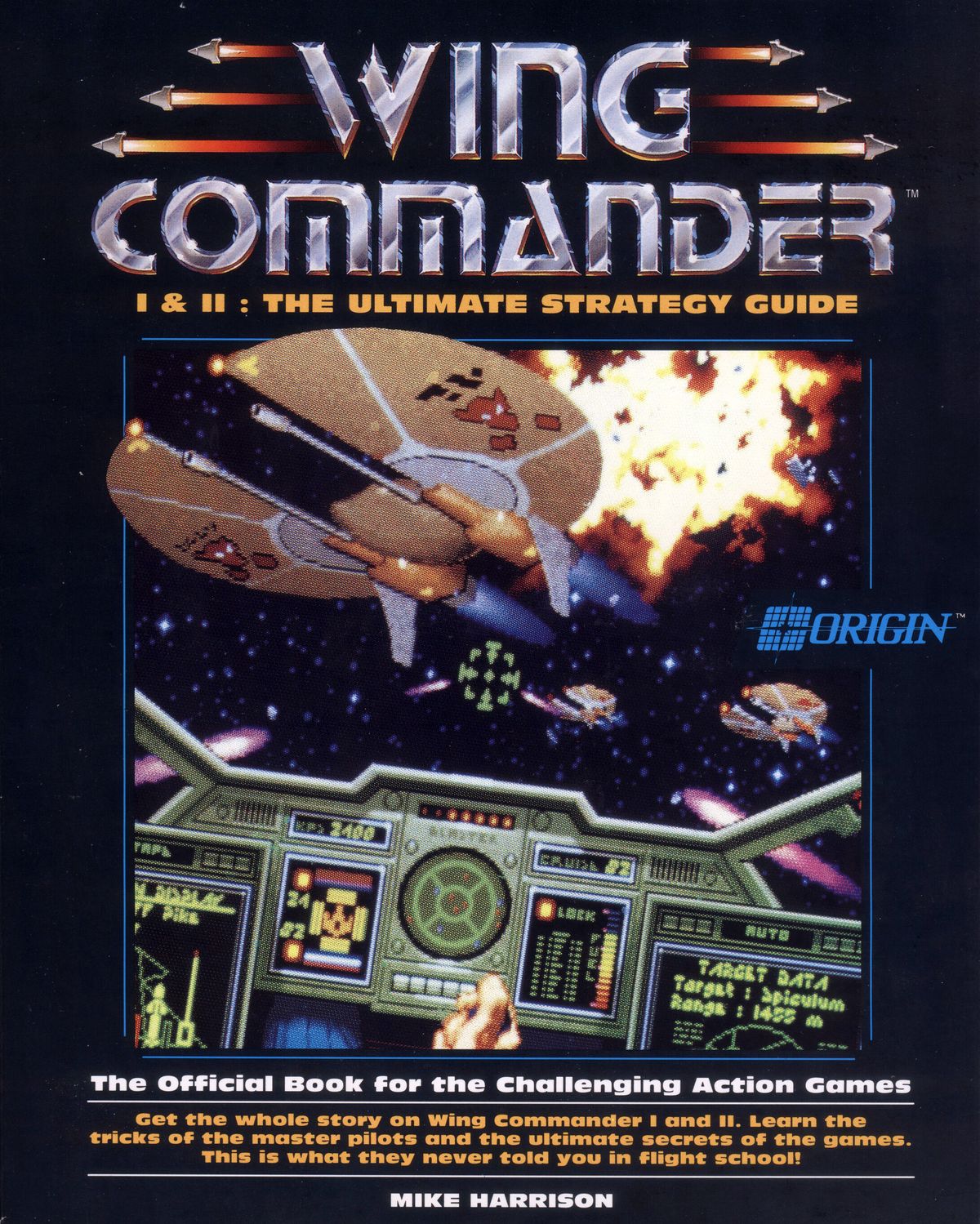
The first pieces on Wing Commander, for example, are a rewrite of Mike Harrison's Software Meet the Movies: Making Wing Commander I and II reworked only to make it clear that the author doesn't believe any of the parts where Chris Roberts was responsible for anything. I should pause to stress that this is not an accusation of academic dishonesty; in fact, the Digital Antiquarian typically sources the material being mirrored as part of their 'research' facade. It's also entirely reasonable to question an official narrative like Harrison's which was published by Origin and intended, obviously, to tell a sanitized version of the behind the screens story. But that's not quite what the Digital Antiquarian ever actually does. Rather, they have a true devotion to officially screened sources–junket interviews, press releases, making of fluff–except where they must be ignored or reworked to square with the added narrative. I will show you shortly how this flawed approach specifically ruins this article about Digital Anvil.
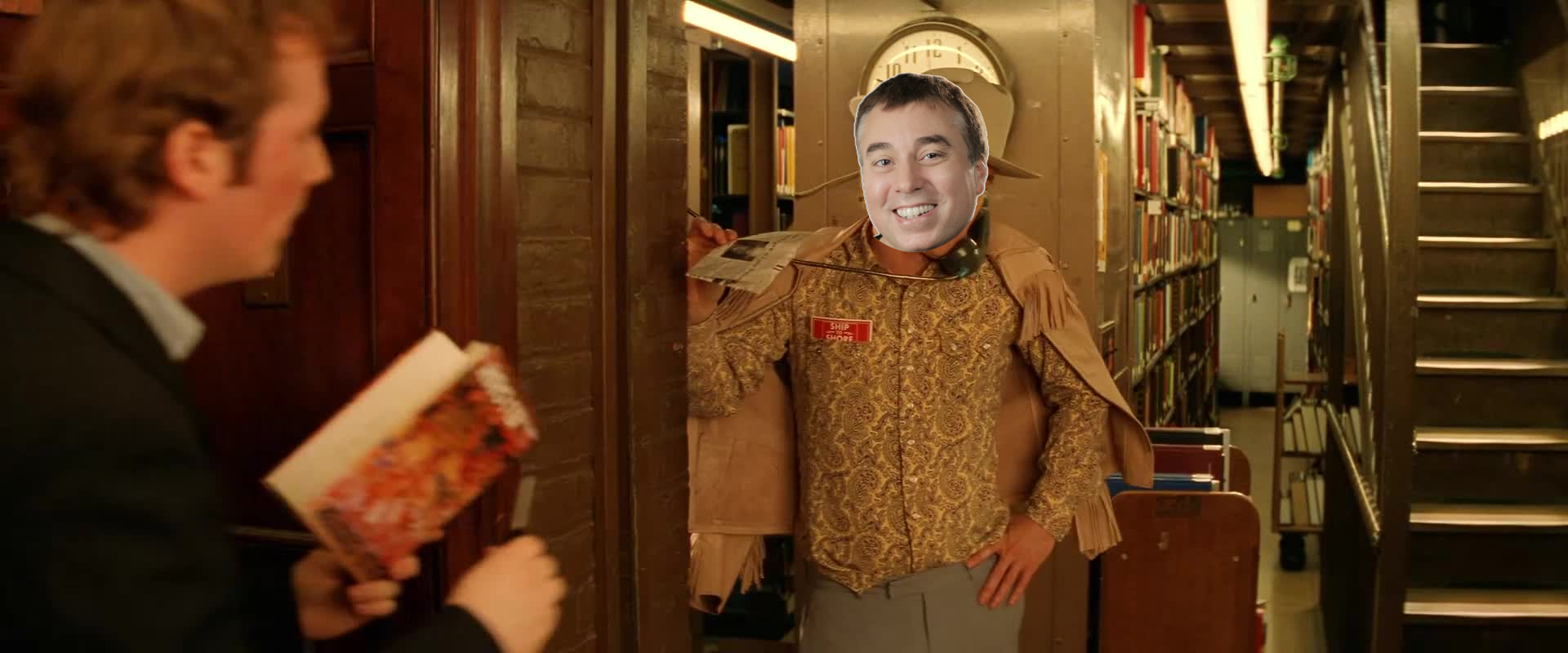
The core of this article is from a chapter of the 2012 book Generation Xbox which interviews movie producer Todd Moyer. Moyer, through his sketchy production shingle No Prisoners, produced the 1999 Wing Commander movie to no one's satisfaction. In the years since, he and Chris Roberts have occasionally spoken poorly of one another, each blaming the other for the movie's failures. I can't accurately speak to who is right and who is wrong, just say that both have made reasonable claims that we've reproduced many times. I suspect it's a case of Chris Roberts being a creative without a talent for financing and Moyer being, as he acknowledges, someone focused on money without any regard for art. The irony is of course that Roberts would go on to run his own sketchy production shingle and then billion dollar computer game while Moyer would fade into obscurity. However, I can say something that the Digital Antiquarian chose not to: the Generation Xbox interview in question was considered so egregious to Chris Roberts that he personally issued a direct rebuke to it. Hmm!
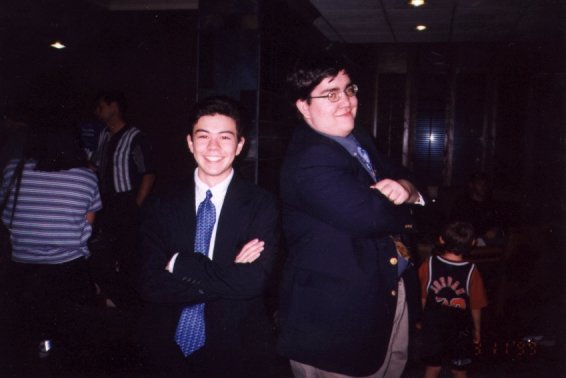
Before I continue I need to stop to address my own biases. I am a Wing Commander superfan; in fact, I'm pictured as such in the Digital Antiquarian article! I have loved Wing Commander my entire life. I am not a Chris Roberts fan but I am ultimately a well-wisher. I worked for Chris Roberts at Cloud Imperium for ten years. I have seen him be utterly brilliant, I've seen him magically sell boardrooms and concert halls of people on a seemingly impossible vision and I've seen him do incredible work when pushed up against the wall again and again. I've also seen plenty of flaws. I've seen him be absolutely blind to his detractors, I've seen him make horrible mistakes that have hurt his projects and his employees. I've been treated very kindly by him and I've been deeply, deeply hurt by him. I have not spoken to him in several years. I think that he is as flawed a human being as anyone else in the world and that there are endlessly fascinating things you could write about his story, good and bad. But none of what's in this article is speaking to any of that reality; it's just SomethingAwful forum troll nonsense packaged in a thick veneer of faux-academic writing.
So why am I bothering to write any of this? I didn't really want to! For many years, I relished in furious internet arguments and I was so very good at winning them. I was the loudest and the smartest person in a given forum thread and that is a terrible combination, one that made me pretty unpleasant. I gave up that kind of thing some years ago and have tried to focus on building a welcoming and moral community that focuses on preservation and positivity. But when this article came up and was being passed around social media and the WCCIC Discord, I was asked repeatedly by that community: why not write a response? Why not let people know the perspective of the guy that actually knows the thing the article is supposed to be about? And so I suppose here it is. I believe in telling the real story behind Digital Anvil and the Wing Commander movie. I don't think Chris Roberts would even agree but I see the Wing Commander movie's story as incredibly fascinating because it is a case of some incredibly brilliant people doing amazing work that could not come together. It's something I'd like to see a real historian write about someday and filling the internet with this trolly dreck unchallenged makes that ever more difficult. I started off with an 'angry' draft of this and didn't bother publishing it because that's such a stupid perspective to take. So here's a second attempt, keeping only the original title for the update… which clearly now refers to me for doing this in the first place.
So here's how it all falls apart. From the article:
Indeed, even at this early juncture, Roberts was savvy enough to put together one eyebrow-raising arrangement of his own: he “hired” Digital Anvil, his own company, to provide the movie’s visual effects, thus funneling some substantial portion of that $30 million budget into his and his colleagues’ own coffers long before the movie ever made it into theaters.
Here we are told that Chris Roberts square quote hired Digital Anvil to do the Wing Commander movie's CG shots and that this really raised eyebrows. How this is a problem is also questionable structurally; movie VFX houses aren't applying for government contracts. Even before the massive historical misunderstanding this is a strong "I accuse the phone company of making that film on purpose!". But it's getting the story 100% backwards. We can prove it. On May 17, 1996, Chris Roberts met with Mike Medavoy's Phoenix Pictures to pitch the Wing Commander movie. His presentation included a director's reel of footage from Wing Commander III and IV and a copy of Kevin Droney's already finished first draft script for the film. Three days later, executive assistant Stuart Volkow e-mailed his thoughts on the project to the rest of his creative team.
The notes were not particularly gentle: he did not like Droney's script and found Wing Commander IV's production to be amateurish. But he also recognized a genius to the underlying creative work that he believed could be worth investing in. The pitch meeting, one of many like it that had begun with the initial treatment for the movie in 1995, didn't result in a deal between Phoenix and Electronic Arts. But in September, Volkow's notes were leaked to the Wing Commander Home Sector's Dan Hardwicke1 who published them online. This caused a firestorm in the Origin community, one so large it's hard to imagine that a remotely decent researcher didn't spot it (especially as it was the first mention anywhere in public of Digital Anvil). Fans bickered over whether or not the notes were real, what they represented, whether a Wing Commander movie was really being made and so on. In retrospect, the notes were real. They clearly reference the actual script that no one publicly knew existed at the time. They confirm a lot of things, including that Electronic Arts was bullish on Wing Commander… and they're the first ever public mention of Digital Anvil. Again, something that basic research about Digital Anvil should've revealed. And look at where it comes up:
Roberts is open to discussing the possibility of other directors. The digital fx would in any case rest with him and a new CG studio he is putting together, Digital Anvil.
Digital Anvil was INTENDED TO BE the CG studio for the movie from its inception, months and months. The idea was always that Chris Roberts could make the movie–which despite the popular narrative he was not clearly desperate to direct—with the new outfit. This was not some evil scheme that 'raised eyebrows', it was the whole point of the endeavor. (The Digital Antiquarian's understanding of the story is actually even more embarrassing: Origin began trying to make what would become the Wing Commander movie in 1991 at the very start of the development of Wing Commander II. The idea began with, surprise, exactly this idea: that Origin could use the same team currently learning 3DS to make the game to make a movie. They commissioned a treatment and a first draft script from GP Austin (you can read it here) and Warren Spector's production group put together a budget. But Origin soon found that they couldn't hire 3D artists quickly enough to satisfy the increasing needs of their game and the project went on the back burner.)

But beyond that, none of the story of Digital Anvil is here in this story about Digital Anvil. The Wing Commander movie didn't spin off from some sales failure, the entire project came to be because Chris Roberts went to Hollywood… to produce a Wing Commander television show with Universal! Chris teamed up with Universal's Jeff Segal to develop Wing Commander Academy and in the process Segal took a bet on Origin's long suffering movie project. Like many people, he immediately took to Chris Roberts and his vision (if you are trying to figure out Chris Roberts, this ability is what you should be looking at!) and arranged to pay to turn the treatment into a script. Here we are told "He gave it to Kevin Droney, a screenwriter who had earlier turned the Mortal Kombat games into a movie, to make a proper script out of it, then sent it to Hollywood on a wing and a prayer." No, a big three major motion picture studio paid for this because Electronic Arts wanted to make a Wing Commander movie after Chris successfully sold and produced a season of television.
The article goes on to imagine some moment, apparently in September or October 1996, where Origin's management called Chris Roberts to account for something implied but not specified about Wing Commander. And that's just a kid's fantasy about how any of this kind of business works. Ignoring that Chris Roberts was Origin's senior Vice President at the time (he was the management imagined here) this is a fantasy. It was clear before Wing Commander IV shipped that Chris was going to step away to build his film company. Electronic Arts wanted him to stay on and produce Wing Commander V and he countered that he wanted to do something other than Wing Commander, a game called Silverheart. Why is none of this easily documented history in the story and instead we're supposed to imagine that a company that forecasts its projects and plans years in advance simply decided one day to fire Chris Roberts? Real life isn't some sinister drama. Chris had been building Digital Anvil for months as part of the Wing Commander movie project Electronic Arts was pushing which dovetailed in his interest in movie production (and not, as is mythologized, being George Lucas). That's WHY Robert Rodriguez helped found the company in the first (something the Digital Antiquarian notes but decides is actually implying something sinister, of course).
Microsoft, which had made its “significant investment” in Digital Anvil in the expectation that the studio would exclusively make games exclusively for it, could hardly have been pleased by the pivot into conventional film-making, but it showed remarkable patience and forbearance on the whole. Knowing that his mega-corp’s reputation as a ruthless monopolist preceded it, Ed Fries was determined to present a different face to the games industry, to show that Microsoft could be a good, supportive partner to the studios it took under its wing. An ugly lawsuit against Digital Anvil — even a justified one — would not have forwarded that agenda. Once again, in other words, Chris Roberts got lucky.
And here's the core of the peach. The Digital Antiquarian has found ridiculous internet trolls and reconstituted Digital Anvil's story to reach their easily discredited (with a single Phoenix Pictures memo!) stories. So you can't be told that Digital Anvil was founded to make the Wing Commander movie or that the project the company worked on for the first year of its existence was a short film intended to show that they could do high fidelity SFX for the Wing Commander movie. (You can watch it online.) But look at the ridiculous shape of this thought on its own: the only reason no one knows this story is because one of the most famously litigious companies in the world didn't want their partner companies to… know that they would be punished for committing fraud? How does this person think business works? Gotta be nice and friendly or people might not want to work with the company with all the money that dictates how everything in the industry works! And the fact that I thought that proves it happened!
The real story is that Chris Roberts wanted to make (not specifically direct) movies and built Digital Anvil with that in mind. He loved his experience directing the games and recognized that CG VFX was about to boil over. He reached an impasse with Electronic Arts not over Wing Commander being a secret failure (who even knows) but because he didn't want to make a yearly Wing Commander game for the duration of his next contract. What he DID want to do, though, was not some money-making mega scheme… despite not being mentioned in the article, it is massively well documented: he wanted to make an RPG project he had been developing with Michael Moorcock. He speaks of it over and over during the Wing Commander IV launch, Origin did test shoots for the full motion video, he commissioned set blueprints and costumes and authored an outline that became a complete novel (which was ultimately published on its own). And in the years since he has personally bought the rights for the project back repeatedly… something that's fascinating to me and I think also greatly informs Chris Roberts' connection to his projects. And all that time he was meeting with potential production partners to put together a Wing Commander movie.
The story of Digital Anvil coming into games is pretty much the opposite of what this article about the story of Digital Anvil coming into games says. Digital Anvil's first project (which was public! It played at SXSW in 1997!) was their Wing Commander movie test. The company went from being a VFX house to being a game developed BECAUSE the Microsoft deal happened and absolutely not in spite of it. The company doubled in size because it BECAME A GAME STUDIO and not because they were stealing money in a sinister plot to produce a film for a different, smaller company. After all, the Digital Antiquarian would like to imply that Chris Roberts' devilish scheme is not that he stole money for himself but that he stole money from Microsoft to produce a movie for Electronic Arts, a much smaller and less influential company which the Digital Antiquarian also would like you to believe savagely fired him personally several months before. Makes perfect sense!
(There's actually another untold element here. One major reason Digital Anvil pivoted to (TO) games is that they could. When he started the studio, Chris did not (either out of respect or because he contractually could not) hire away his former team from Origin. But that next year, Electronic Arts changed their bonus structure and many of Origin's veteran leads quit furiously and suddenly became free agents. This dovetailed nicely with Chris Roberts' discussions with Microsoft that resulted in that first publishing contract.)
And the game part of the story is so interesting and the Digital Antiquarian just… doesn't know it, at all. For example:
Another game in the pipeline that went unmentioned was Erin Roberts’s Starlancer, which was to be a linear space sim with a set-piece story line, an even more obvious successor to Wing Commander than was Freelancer. (Students of the Robertses’ later careers will recognize a kinship between Freelancer and Starlancer on the one hand and Star Citizen and its single-player companion Squadron 42 on the other.) That’s five games in all: it was quite the agenda for such a small studio. And then the movies came calling.
We've already pointed out that the last part is an absolute lie, but this doesn't even understand StarLancer. StarLancer wasn't made by Digital Anvil, it was made by Warthog, Erin Roberts' studio in the UK. It was a completely unrelated generic space sim called Zero Tolerance which they had been pitching around the industry without any bites for several months when Chris signed a game deal with Microsoft. Microsoft, as a show of faith in Chris Roberts and in a way that this article could easily greatly misconstrue to its ends if the author actually knew any of the story they're writing about, purchased the game from Warthog. The 'connection' to Chris' dream project, Freelancer, was an incredibly slight narrative (and utterly meaningless) thread that was added after the fact. It's not some prototype for Star Citizen that speaks to the future, it's a total coincidence that also proves how interested Microsoft was in keeping Chris happy.
Why was Microsoft so interested in doing that? It doesn't show up in the article because in the Digital Antiquarian's world only Chris Roberts has agency. But the other side of this story is fascinating and leads to all sorts of interesting what-could've-beens: Microsoft was laying the foundation for XBox. They wanted to learn how to build gaming hardware and software and they placed their bet on the latter on Digital Anvil. Just like they turned hardware bets into production systems with products like their Sidewinder line to prep for their planned future, they wanted to grow studios that would be ready to go for Xbox, able to produce the first party titles that would sell the system. That's why they made the initial deal with Digital Anvil and that's why they bought the company in the first place. Microsoft was less interested in StarLancer and Conquest and the like than they were in having the talent and the cache to make… well, ultimately Brute Force. Which is fascinating! As in ANY BUSINESS ARRANGEMENT EVER both parties are using each other… and it's pretty interesting to figure out how they were doing that rather than to work out how it should all be part of a conspiracy.
Anyway, here are a couple of other notes about disqualifying errors and misleading information in the article.
The official Wing Commander world premiere took place on March 12. It was less than a gala affair, being held in Austin rather than Hollywood, with none of the cast in attendance; the actors in question were still saying polite things about the movie when forced into it, but quite obviously preferred to talk about something else. (Freddie Prinze, Jr., would grow less polite in later years, calling Wing Commander “a piece of shit” that he couldn’t stand to see or even think back on.) It appeared on 1500 screens across the country that same weekend, complete with the Star Wars trailer that Fox hoped would prove its secret weapon.
The official Wing Commander's world premiere took place on March *11* in LOS ANGELES and it was attended by the film's cast (excepting Matthew Lillard who was shooting on location). The slightest amount of earnest research would have revealed this; the event was promoted in Variety! You can still today purchase photographs of Freddie Prinze Jr., David Warner and (for some reason) Rachael Leigh Cook walking the red carpet on Shutterstock (someone please actually do this, I would love to have these photos without the watermarks). The Austin "world premiere" the next day at the Paramount was a (sold out!) charity screening that was part of the SXSW festival. Chris surely considered this to be an appropriate place to 'launch' the movie as exactly two years earlier SXSW had premiered Digital Anvil's very first production, the short film intended to prove to investors that they were capable of doing feature-level CG and matte work.

I must next call out the sheer nonsense of framing the exact same movie junketing process as every other film ever made as "forcing" the actors to say nice things about the film. Beyond simple decorum, actors universally praise bad movies because they personally stand to benefit from the success of films they make, either directly because they have points in the production or because they need to use their brief moments of visibility to secure additional roles. It is not part of a dastardly plot that Chris Roberts hatched (but also fell upwards into because he's just so stupid!). I know we don't need to harp too much on this as it's a nakedly obvious attempt to present Freddie Prinze Jr. as having only ever said nice things about Chris Roberts because he had to and then was only telling the truth when he later criticized the movie.
Now, it is true that Freddie Prinze Jr. once called the Wing Commander movie "a piece of shit." The Digital Antiquarian tells us that this is evidence that he "would grow less polite in later years", How many years do you think this vague statement is intended to cover? If you said more than one then you are incorrect because the interview in question was published on Movieline on May 1st 2000, less than 14 months after Wing Commander came out. Here is the entire interaction covering Wing Commander:
Q: Have you liked all the films you've been in?
A: No.
Q: Which ones don't you like?
A: I can't stand Wing Commander. I can't watch one scene of that movie.
Q: How did it become so awful?
A: It's the simplest story in the world. I read the script and loved it. So did my buddy Matthew Lillard. We both got the parts. We went on location and they said, "Here's the new script." It was a piece of shit.
This is interesting for a few reasons. First of all, the actual statement doesn't speak to the Digital Antiquarian's claims at all. He's simply saying that Wing Commander was a bad movie, something that I don't think anyone has ever questioned in the first place. The article would like to imply that this is proof that when allowed to 'speak freely' that Freddie Prinze Jr. would endlessly trash Wing Commander as he always wanted to. Except you can find dozens and dozens of Freddie Prinze Jr. interviews in the ensuing years where he explicitly says that Chris Roberts is one of the best directors he's ever worked with and that he wishes the circumstances were different. Just last year he told ScreenRant that Wing Commander was the one project he wishes could have had a sequel! Did Chris Roberts get to him again?!
But it's also worth noting that this isn't saying much one way or another because Freddie Prinze Jr. himself is a notoriously unreliable interview subject. He is well known for saying controversial, untrue things to make interviews more exciting; he was recently walked away from the Star Wars franchise for exactly this reason. For my part, I don't think this is sinister; he writes for professional wrestling, he is conscious of exactly the reaction he's going to get when he does this… and he does it a lot! Another issue with the Movieline quote that the Digital Antiquarian should've flagged is that it just isn't true. I mean, it is true that the Wing Commander movie wasn't good but the story he tells about it is not. Freddie Prinze Jr.'s audition footage clearly shows him reading from the third draft script which was nearly identical to the one shot in Luxembourg. I would guess that he is telling this story because the real one (the movie was heavily reworked AFTER shooting) would have required context that doesn't make sense in a casual interview. (One surprising thing you will find is that while you can find angry game developers out there that Chris Roberts is pretty universally praised by his casts and crews. Actors LOVE working with him and I think that he has a genuine way with them. This has been left out in favor of the one time Freddie Prinze Jr. said something bad about the movie itself 24 years ago. That is not to say that it's some specific talent that translates to a better movie, but actors across all his productions do specifically praise–often years later–his hands on style.)
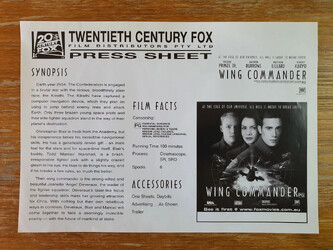
Finally, proper research should've contextualized "complete with the Star Wars trailer that Fox hoped would prove its secret weapon". The Wing Commander movie did ship with the Star Wars trailer attached… alongside instructions from FOX telling theaters they should remove the trailer and play it with any screening they wanted. This alone is one of the most fascinating moments in the Wing Commander movie story and it's somehow totally absent here. In fact, it's almost to the level of fictional drama that our pal believes is happening constantly everywhere else. FOX wanted to attach the trailer, Lucasfilm found out and demanded they put a stop to it and so they informed theaters not to promote Wing Commander as having the trailer, they arranged to show it on television the Thursday before Wing Commander released and they put out a fair amount of press aimed specifically at the Star Wars community about how the trailer was specifically not attached to Wing Commander. Chris Roberts, for his part, engaged with the fan community and specifically told everyone to spread the word that while FOX was saying this, theaters would never actually bother to detach the trailer. To me, this is a very interesting story about his engagement with the movie, his understanding of his audience (and the rise of digital communities!) and how he reacts when he seems to be cornered; it's fascinating material that a capable writer making a case for their view of Chris Roberts could take in any direction (and so the Digital Antiquarian simply left it out).
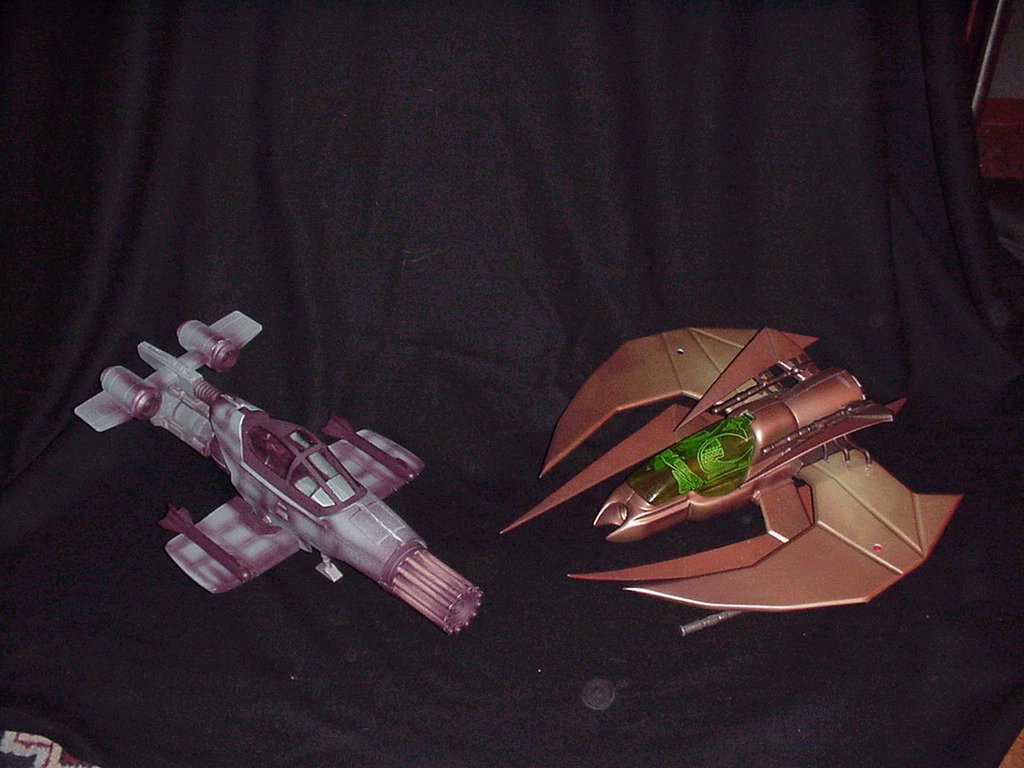
A planned panoply of Wing Commander action figures, toy spaceships, backpacks, lunchboxes, tee-shirts, and Halloween costumes either never reached stores at all or were pulled from the shelves in short order.
Of the items mentioned here, Wing Commander action figures, backpacks, tee-shirts and Halloween costumes all made it to market and they were certainly never "pulled from the shelves". The same is true of the tie-in novels, movie book, official magazine, fine art painting and posters. This is meant to imply that there was some Star Wars level of merchandise planned for the Wing Commander movie and that simply isn't true. Two products WERE cancelled: the toy spaceships planned to go with the action figures and the Tiger Claw cutaway poster from SciPubTech. In both cases, they were doomed less by the movie's failure and more because FOX couldn't set a date in time to allow them to go into production for the film's release. X Toys could rush the figures from China, the vehicles would've taken additional months.. (A quick look at Phantom Menace's much more well documented licensing will show you hundreds of similarly cancelled products; this is another completely normal part of the merchandising process being sold to you as scary and negative.)
Not only had Chris Roberts never received any formal training as a film director, but the cast and crew had three different mother tongues, with wildly varying levels of proficiency in the other two languages.
This is actually not true on its face, Chris Roberts attended a director's boot camp training program as part of the preproduction of Wing Commander III and he dedicated much of his free time in the ensuing years to learning the job and the industry. But it's also a lie by omission. By the time he got off the plane in Luxembourg in 1998, Chris had directed half a dozen multimillion dollar game productions, three film shoots (two feature-equivalent games and a theatrical short), done and uncredited edit on another major FMV project, spent over a year in preproduction on Wing Commander, had executive produced a television show and so on. And the second part about the different languages is taking the lighthearted color from THE FILM'S OWN PRODUCTION NOTES and implying it's something sinister. This is again where the Digital Antiquarian is either failing at reading anything beyond its literal meaning or pushing the edges of about how blatantly biased they can get away with being. The production notes point out that it was tough to communicate with all the different groups as a way of selling that the movie was an international production, not because someone slipped into its actual marketing material a secret gripe that only one special guy can pick out.
Origin flew the teenage proprietors of the biggest Wing Commander fan site down to Austin for the premiere. (Aren’t they adorable, by the way?) They saw the movie four times in a single weekend — not a fate I would wish on anyone, but more power to them.
This is captioning a photo of Chris Reid and I. It is also not true: we saw Wing Commander five times that weekend!
As for the article's critique of the Wing Commander movie: I think it's entirely fair. I think it's pretty lacking in comparison to the goal in that it doesn't look at how the movie actually fell apart between the shoot and the final product, but that's probably a fair choice to make for a review. I also think that would've been much more interesting and probably damning of Chris Roberts. His months of desperately trying to get the movie to work would be an interesting story that would tell you a lot about his character that's sorely needed in all this. The resources he tried to tap and the favors he tried to call and the shape of what his vision actually was are all flawed and fascinating. And I do think it's pretty interesting that they call out the piece of the movie that Chris managed to have absolute creative control over, the stunning intro, as being notable (without knowing where it came from, of course!). I've written my own review that covers why I'm interested in the film but it doesn't at all disagree with the idea that it's not, as released, a good movie.
1 - Another thought with the benefit of years: based on Hardwicke's certainty that the Phoenix Pictures document was real surely indicates that it was leaked to him Chris Roberts or someone else on the nascent Digital Anvil team that had leaked the memo to him in the first place, presumably to help move forward whatever deal was in progress at that time. This would happen again, with us, a few years later when Lucasfilm came out against attaching the Phantom Menace trailer. Perhaps this is more interesting color for someone trying to understand how Chris Roberts responds when he's in a corner?






Follow or Contact Us