New Pricing Model Announced for Upcoming EA MMO (May 5, 2010)

ChrisReid

Super Soaker Collector / Administrator
Electronic Arts has been experimenting with a variety of different business models for a handful of their latest products. From its budget priced downloadable games like Battlefield 1943 or WC Arena to possible super sized pay-to-play demos, the company has shown its willingness to take a few risks and try new things with its pricing. The trend isn't all new either: entirely free Lord of Ultima takes a cue from Wing Commander Secret Ops. Future games will also likely be supported by micro transactions, selling small incremental pieces of the game on top of or instead of a regular up-front payment. The latest concept is the payment model announced for the upcoming MMO APB. In addition to a $50 starter pack and $10 monthly fees, the game also has an option to buy game time at the rate of $7 for 20 hours. On top of that, there will even be avenues to earn play time for doing outstanding things within the game itself.




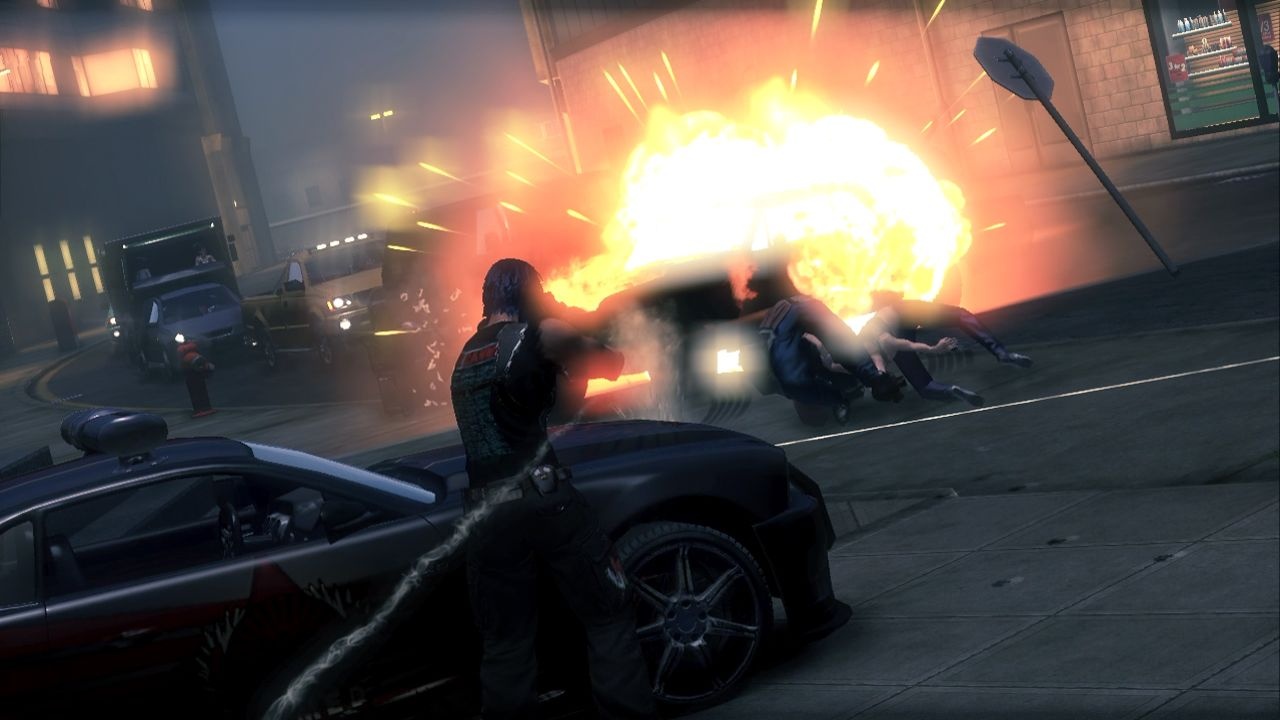
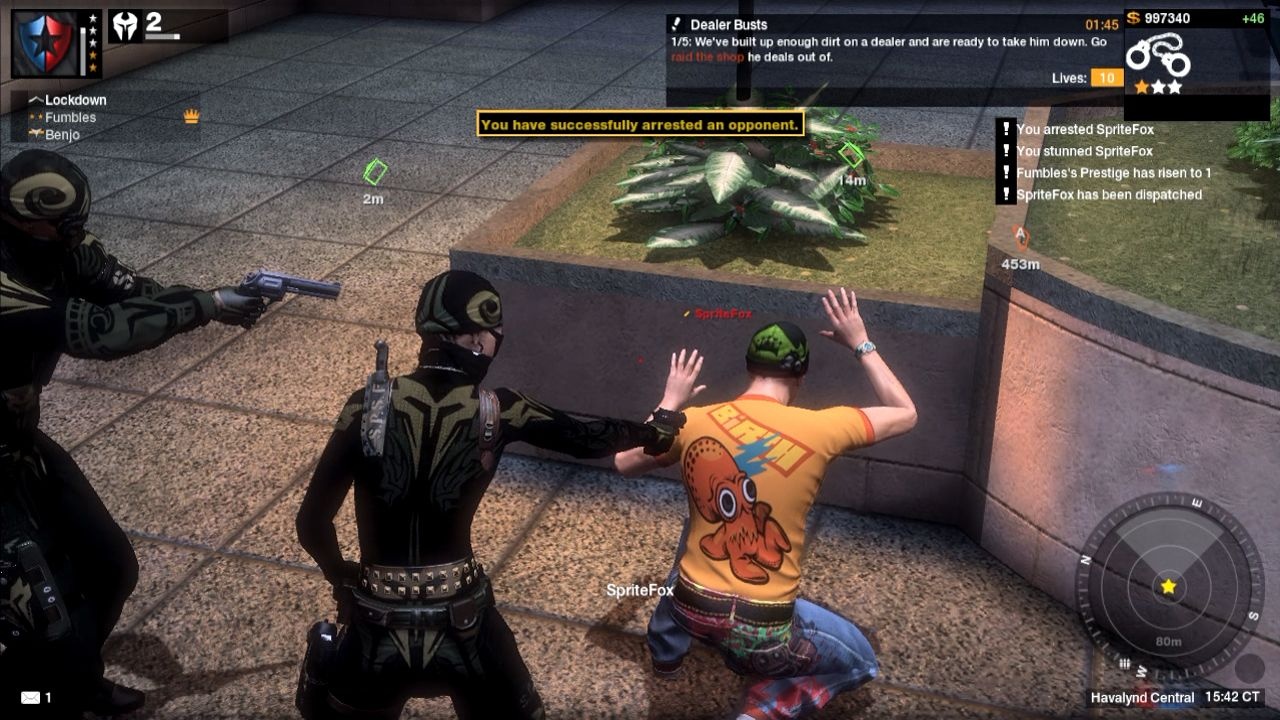
APB takes the universal theme of Criminals and Enforcers and brings it to a persistent, open-world, online multiplayer setting in the modern, crime-ridden fictional city of San Paro. Some players will achieve notoriety by feeding on the city, its people and its businesses…the Criminals. Some will live by a higher code and instead feed on the criminals and their organizations…the Enforcers. This dynamic where players become the core content for other players is one of the many unique features of APB.
...

In addition to this flexible payment model, players can also earn game time by actually playing the game. APB provides avenues for accomplished gamers or creators to earn rewards for their creativity and subsidize their ongoing costs with their in-game efforts.

David Jones added: “We wanted to provide a simple and flexible way for occasional and core players alike to pay for their play without being financially tethered to the game. The model also provides an opportunity for customers to subsidize their costs by leveraging their talent or market savvy in the ‘points’ Marketplace. Highly talented players could potentially even play for free in this way.”


--
Original update published on May 5, 2010
 
Last edited by a moderator:
Lord of Ultima is not entirely free. It uses a micro payment model. For instance, one can purchase a 'Building Minister' to lengthen the build queue and allow the ability to add things to the queue that you don't have the resources for. Then when the resources become available, the build starts. This also is a renting type system. As in, the Minister is only there for a certain number of days.

Current cost for the Building Minister is 110 diamonds for 7 days or 280 diamonds for 30 days. Diamonds are purchased for 500 = $5 USD, 1100 = $10 USD, etc.
 
So the monthly fee and the game time fee is an "either-or" type option. Pretty good idea.

My biggest problem with MMOs is the lack of feasibility in spending money each month for something I might play for only 20 to 0 hours in a whole month (due to being busy or having a lack of interest) for probably most of the year while maybe playing 100 hours in one month just once or twice a year. (note the numbers were practically picked out of then air)

I have other issues with MMOs (at least for playing them myself), but the most universal one is money.
 
That's the catch, isn't it? I swore I'd never touch on-line games because of the possibility of a month's subscription effectively being wasted due to lack of time or other reasons. Then I tried the free-to-play-with-micro-transactions model, which was great because it afforded the distributor an income while allowing the flexibility of choice as to how often or little one would play in a given month. But then, I realised that the down-side to this is that wealthy players (or at least those with more money than sense) used their money to gross advantage over others, making such games unbalanced and not fun at all.

Conclusion? I've quit on-line gaming. I enjoy single-player games so much more.
 
Is there any legal or business reason to use points to sell products? Why can't they just price and charge things with actual money? Why do I have to pay 500 Bioware points to by a DLC, and not simply 5 dollars?
 
Well, one reason that I can think of is that it doesn't cost the company anything to give away points. They can offer you points as a reward for something, they can give you X points for free when you buy a new console, and so on - in that regard, they can work like frequent flier points. This wouldn't be possible with money, obviously - you can't very well give someone fifty dollars for free when they buy your console, because it would be equivalent to cutting fifty dollars off the pricetag, and you'd have no guarantee that those fifty dollars would be spent on games.

Another reason, I suppose, is security. You do have to pay for your account and for those points one way or the other - but your money goes to a single, reliable publisher. With that out of the way, you don't much care how you spend your points around, you don't need to worry about your credit card details getting stolen while buying a game from some dodgy small developer you'd never heard of.

Finally, it allows them to better set up prices. If you need 100 diamonds to buy something, and 500 diamonds go for $5, then the item in question costs $1. That's borderline - most (but not all!) people would be willing to pay $1, but any less than that would be a nuisance. I mean, typing in credit card details and such to pay $0.1? No way. Using points and stuff like that allows you the possibility of charging smaller prices for smaller stuff that you otherwise wouldn't be able to sell at all. It also forces the players to spend more - even if they wanted to, they couldn't buy something for 10 cents, they have to spend $5 to get those 500 diamonds and then use 10 diamonds to pay for that small whatever-it-is.
 
- It completely demonitizes the transaction. When you're exchanging Microsoft Points for a game you aren't really buying anything. Your purchase happened earlier, when you bought the points... so you don't have to worry about laws requiring taxes and so forth.

- It gives a perception of equality. The same game is now 800 units everywhere in the world... and the fact that 800 units might cost twice as much in Japan as it does in the US is pushed into the background.

- It separates the game company from a huge amount of credit card fraud. Microsoft doesn't have to worry about stolen credit cards being used to buy Rock Band DLC and how to deal with/reverse/whatever such transactions.
 
I also guess it encourages spending. When I have to pay cash I see the value of my money. Some abstract points I will 'waste' much easier.
 
The "Krusty Dollars" concept is pretty old, the only enforcable claim you have is to receive the offered amount of whatever the "currency" is called. What you actually get for them now or in the future is free for the company to decide.

EDIT: Whoops, pretty much what LOAF said.
 
That's the catch, isn't it? I swore I'd never touch on-line games because of the possibility of a month's subscription effectively being wasted due to lack of time or other reasons. Then I tried the free-to-play-with-micro-transactions model, which was great because it afforded the distributor an income while allowing the flexibility of choice as to how often or little one would play in a given month. But then, I realised that the down-side to this is that wealthy players (or at least those with more money than sense) used their money to gross advantage over others, making such games unbalanced and not fun at all.

I would have hated the microtransaction model as a 14 year old with no money, but today I would probably love the ability to spend a couple dollars here and there to buy stuff that I don't have time to unlock by playing.

On the subject of monthly fees, I think it's better to look at it from an annual perspective. If I'm willing to commit to an MMO, I'm going to imagine it as a $150/year investment. I've happily spent that much on the collectors editions of some games, so $150/year for a great MMO seems like a decent deal. Maybe I'll play it a lot in the first month, drop it for a few months, come back for six weeks and so on, but if I annualize the cost in my head, I don't have to feel bad about putting it down, and I can mentally note not to worry about the cost until some set point (the end of the year) when I figure it's time to reassess whether I want to continue paying in the future.
 
This presumes that the stuff you get from purchases is also available to those who play without paying. The unbalance happens when there are beneficial items/rewards/whatever exclusively for paying customers. I don't mind this so much in what I believe is called 'PvE', or player versus environment, but in a 'PvP' setting or player versus player, not having a fair and balanced system really detracts from the fun factor.

As for annual payments, some people like yourself may be comfortable with that level of spending commitment, but others might not. Too, you'd have to know in the first place whether it's a game that you're willing and ready to commit to for at least the first year anyway.

I'm not criticising you at all, by the way, just pointing out that it's difficult to find a solution that will work well for all kinds of players.
 
Back
Top