Paint Schemes of Fighters

Farbourne

Rear Admiral
All right, here's an interesting question. The new Excalibur paint scheme that was just posted got me wondering...

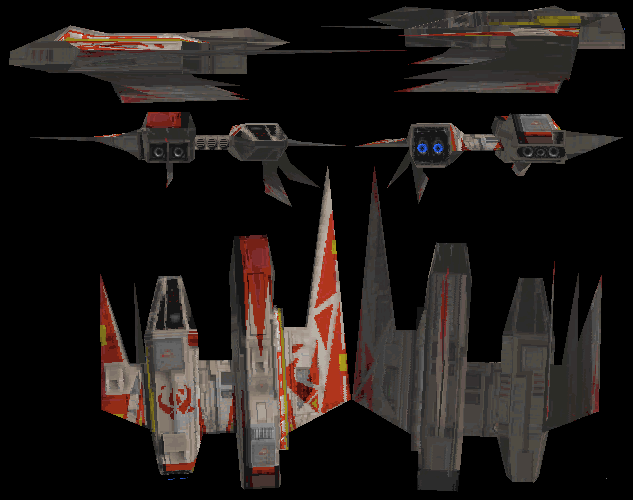
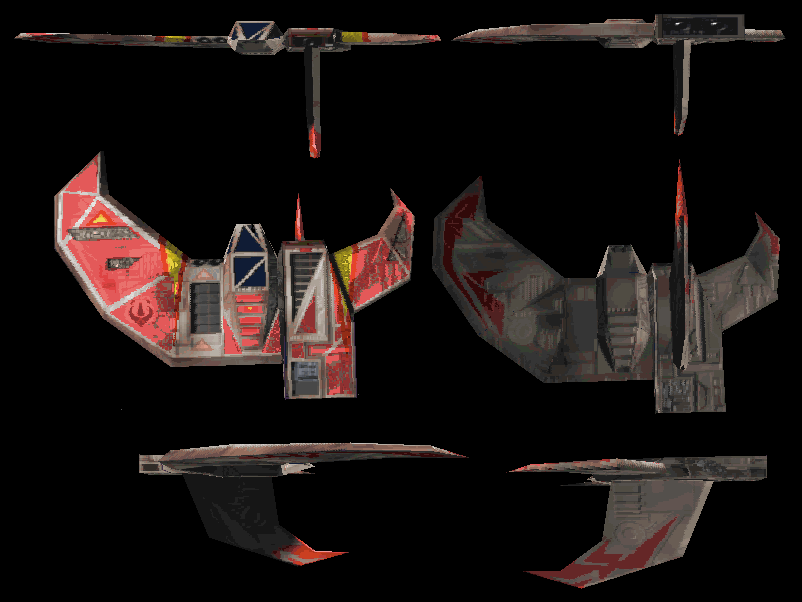
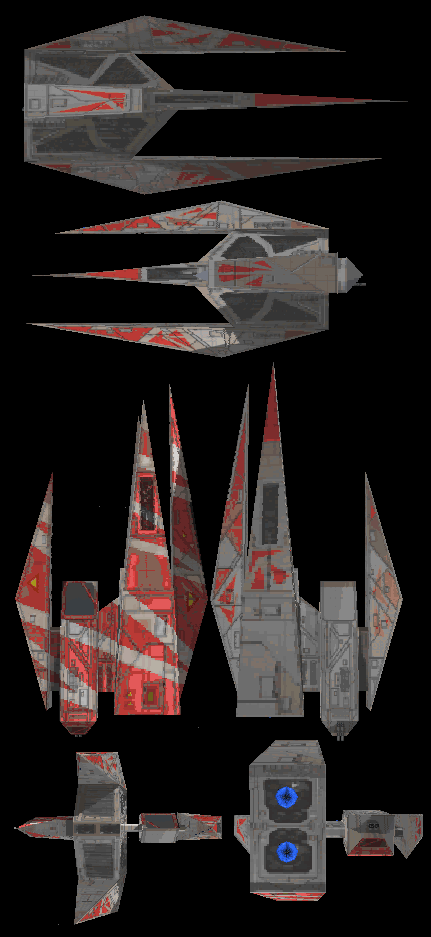
Why are the WC ships painted the way that they are? Confed fighters, especially in WC1 and 2, seem to be largely silver (natural metal?) and green, while Kilrathi fighters overwhelming seem to be orangish-yellow and red. Hellcats are light grey... Bearcats are white. But given that the fighters fight in space, and there is an advantage in a dogfight to being hard to see (or at least, to having your silhouette be hard to figure out...it makes deflection shooting harder), wouldn't it make sense for all fighters to be painted black? Or possibly several dark colors, but kind of geometric/patterned/camoflauge like WWI and WWII vintage battleships, to make their silhouettes hard to distinguish?

Or for that matter, how about light-sensitive skins that become dark when exposed to light (so if the figher is "down sun" of you it will blend in with the dark background) and white otherwise (so "up sun" fighters will blend in with background light sources...) That would kind of be the Wing Commander analog of the WWII practice of painting the bottoms of planes light blue or grey, and the tops dark green camaflauge. We almost have such photo-sensitive color changing technology now...I would think that in 500+ years material science might have progressed a little bit?

And yes, it is true that later WWII allied aircraft went to natural metal, but that was after the Allies had established air superiority, and was motivated by the fact that better performance was achieved by reducing weight through less paint. I'm not sure the same logic applies to WC fighters...but even if it did, shouldn't all the fighters therefore be natural metal? (Or "durasteel" or whatever else they're made out of?)
 
My guess is that they are brightly colored because it isn't any fun to shoot at targets you can hardly see.
 
Well, the short answer is that we just don't know - beyond the art style evolving from World War 2 aircraft in the first two games into ships based on more modern fighters, anyway.

We do know that traditional camoflage exists in Wing Commander. In End Run, Starlight is able to tell that a group of Kilathi fighters aren't carrier based because they're sporting "ground camo paint schemes". For my money, that's what we're seeing a lot of in Wing Commander I and II. A large (but also largely unexplored role, in-game) for fighters is space-to-ground missions - it's what space carrier doctrine was originally developed for. The olive drab Broadswords and Rapier IIs may well be ground camo.

The End Run reference aside, the majority of Kilrathi fighters we see in the games are unpainted save for symbolic red markings. The reddish-brown color of their hulls is said to be the natural tint of Kilrathi durasteel. It looks like we see some camoflaged Kilrathip ships in Arena, though - check out this Paktahn: https://cdn.wcnews.com/newestshots/full/render_paktahn_tusk.jpg (which makes some sense, since the current Kilrathi military was built up to fight a ground-based civil war).

As for physical stealth: Invisible Enemy, an episode of Wing Commander Academy, involves a Sartha with a 'Shroud' style sensor cloak. It's entirely black (with a purple-tinted canopy). In Fleet Action, Hunter notes that most of the Landreich's fighters in Fleet Action are painted "stealth black". Both sides also have 'physical' camoflaged ships, too. Fleet Action mentions picket ships on both sides disguised as asteroids and then the Kilrathi bring out the K Ha Haf "heavy asteroid camouflage fighter". The fact that there was such a drive to developed the Shroud and then Blackfish style cloaks (and the asteroid ships in general) suggests that simple black paint schemes aren't that effective against fighters with targetting computers and ITTTSes.

What about a performance improvement, mirroring WW2? That's possible - remember that fighters in Wing Commander *can* be overloaded with ordinance... the fiction claims that Blair's T-Bomb laden Excalibur was much less maneuverable than those flown by his wingmen (this isn't reflected in the game).
 
Last edited by a moderator:
I suppose I'm just shooting in the dark here, but I suppose there are several possibilities to be examined. My best guess though would rest in that space isn't exactly a well-lit place to start out with. Sometimes sunlight is strong enough to see reflecting light off hulls - when ships are near a system's star(s) or a planet, but I would imagine that many (if not most) confrontations happen in parts of space where there is so little light that ships are only really visible at a range by the light seeping out of the cockpit or windows. It's not portrayed in games or novels often really, but if I were to try to rationalize non-functional paint schemes it'd be for that reason.

I think you have a good point though... dark colorations would indeed make ships much more difficult to sight, especially since so few of the fighter classes could take stealth to the next level with cloaking ability. The only setbacks I could think of it that it'd make fighters very easy to spot on atmospheric missions, but that sure doesn't amount to much.

On the other hand, if one looks at the more ornamental paint schemes on some of the fighters it would appear that it's a psychological weapon against opponents. The classic shark jaws and blood-like red paint on some fighters would be rather intimidating I'd imagine and serve an effective use for color in dogfights. On many confed. fighters color schemes seem to vary a bit by squadron, as some Kilrathi equivelents are for their aces. Maybe ship customization is trivial, but for whatever reason it seems in at least a few situations to take precident over keeping a low profile.

...like I said though, just shooting in the dark. This is interesting; I hope someone pops up here with a certain, logical explanation. xD

Edit: Oops, got beat to the post. Hehehe, that sounds a lot more reasonable...
 
What about a performance improvement, mirroring WW2? That's possible - remember that fighters in Wing Commander *can* be overloaded with ordinance... the fiction claims that Blair's T-Bomb laden Excalibur was much less maneuverable than those flown by his wingmen (this isn't reflected in the game).

This makes sense. It would be interesting if this could be reflected in-game. The player could choose to go with the Thunderbolt sans the torp for improved performance. The Vindicator (a "medium" fighter?) should be sluggish with 3 torps and nimble with zero.

Also, on WC3 the Kilrathi aces had unique paint schemes and some of them, if I remember right, looked like camouflage, tough it might’ve been for stylish reasons.
 
Here's the three ace fighters that actually appear in the game - Fireclaw, Stalker and Bloodmist respectively.

wc3darket2.png


wc3strakha2.png


wc3paktahn2.png
 
Last edited by a moderator:
I don't see how painting (non-shrouded) ships in dark colors would possibly make them harder to see... It's not like they would show up any less red on the enemy's radar (or gray, if he's got crappy civillian equiptment :p) anyway.
 
It's not "stealth" or hiding from radar that I was thinking of. It was deflection shooting. Even with I.T.T.S., being able to accurately see which way a ship is pointed, how far away it is (by eye), and guessing how fast it's going (and whether the opposing pilot will tap his burners) is essential to accurate deflection shooting, as we all know from trying to get high Standoff scores. Without I.T.T.S. (all pre-WC2, and about half of the WC2 fighters, including the venerable Rapier II), it's even more vital. The point of the jagged, angular camoflauge paint schems on WWII battleships wasn't done to make the ship hard to see--radar was around by that point and a battleship shows up pretty well on radar--it was to make it hard to accurately pick out the silhouette for estimation of class, range, and heading, all vital pieces of data for targeting torpedoes and (to a lesser degree) big guns.

I wouldn't be surprised if some of the angular paint jobs on the Kilrathi ships we see serve the same purpose.

Obviously dark colors do play some role. As LOAF pointed out, some fighters were painted black or dark colors to help them out... I just wonder why it wasn't done more... of course, I also wonder why the Japanese painted gigantic red bulls-eyes on their otherwise camaflauged fighters during WWII, so I guess things don't always make sense.

I agree that it would be really neat if lighter loadouts improved fighter performance in game. In WCIV, flying in the dark zone, I remember the ships were equipped with "heavier armor" that supposedly decreased their performance...other than lowering top speed, was there any other effect (i.e. decreased maneuverability or acceleration? And did that actually help the armor scores at all...my Banshee still felt like it was made out of paper...). But other than that, I can't think of an in-game case where such an effect was implemented.

LOAF, you said that carrier-based starfighters were originally designed only for planetside missions. Could you elaborate on that? I find that interesting, given that, by the time the games roll around, only a select few fighters are atmospheric capable (although a line that Halcyon makes in WCI implies that WCI fighters were atmospheric capable...but he also implies that they are inferior in the atmosphere)...
 
Seeing Bloodmist's Paktahn brings back some memories...I remember trying to kill that bastard before he took out Blackmane so many times, he was definitely a pain. But his fighter does look pretty bad ass.
 
LOAF, you said that carrier-based starfighters were originally designed only for planetside missions. Could you elaborate on that? I find that interesting, given that, by the time the games roll around, only a select few fighters are atmospheric capable (although a line that Halcyon makes in WCI implies that WCI fighters were atmospheric capable...but he also implies that they are inferior in the atmosphere)...

Prior to the outbreak of the Kilrathi War, carriers were designed for support of the battlewagons, very similar to the interwar role of carriers between WWI and WWII. The fighters were meant to conduct operations on planetary targets, while the battlewagons would handle the other capships.
 
I agree that it would be really neat if lighter loadouts improved fighter performance in game. In WCIV, flying in the dark zone, I remember the ships were equipped with "heavier armor" that supposedly decreased their performance...other than lowering top speed, was there any other effect (i.e. decreased maneuverability or acceleration? And did that actually help the armor scores at all...my Banshee still felt like it was made out of paper...). But other than that, I can't think of an in-game case where such an effect was implemented.

Well, you can get drunk over Angel and have the game artificially nerf your maneuverability in Wing Commander III :)

LOAF, you said that carrier-based starfighters were originally designed only for planetside missions. Could you elaborate on that? I find that interesting, given that, by the time the games roll around, only a select few fighters are atmospheric capable (although a line that Halcyon makes in WCI implies that WCI fighters were atmospheric capable...but he also implies that they are inferior in the atmosphere)...

Check out the 'Atmospheric Missions' thread (going on now) for an analysis of why this isn't necessarily true.

Action Stations (a prequel novel, about Tolwyn's early days and the start of the war) sets up space carrier warfare as being analagous to pre-WW2 carrier warfare. The fleet is built around massive heavy-hitting battleships and no one has been able to prove that carrier-based planes can destroy a capital ship.

As a result, Confed's carriers existed to deploy fighters for lesser roles - reconaissance, anti-shipping, planetary strikes and the like. Large numbers of fighters were based on planets and charged with ground-to-space interception or ground-to-ground bombing missions.
 
At one point the air force was thinking about painting the F-117's some funky pink indigo color. That was color that the really smart R&D guys found to be practically invisible at night. It didn't sit well the fighter jocks. So they painted it black.

In Wing Commander I believe that they paint fighters simply to distinguish squadron (think the black widow on the back of the Devastator in Prophecy). And they probably also paint fighters whichever way the pilots think is the most outstanding (think the way that the Tuskegee airman painter their WHOLE tail red-orange. I believe they were just supposed to paint the rudder... their CO fixed that)

Edit: It's also out of pride for the squadron.
 
At one point the air force was thinking about painting the F-117's some funky pink indigo color. That was color that the really smart R&D guys found to be practically invisible at night. It didn't sit well the fighter jocks. So they painted it black.

In Wing Commander I believe that they paint fighters simply to distinguish squadron (think the black widow on the back of the Devastator in Prophecy). And they probably also paint fighters whichever way the pilots think is the most outstanding (think the way that the Tuskegee airman painter their WHOLE tail red-orange. I believe they were just supposed to paint the rudder... their CO fixed that)

Edit: It's also out of pride for the squadron.

I really loved those squadron markings, like the lightning bolts on Rapier IIs and red white and blue stripes on Broadswords.
 
Back
Top