WC vs History: Final Frontier of the Tin Can Sailors (October 25, 2011)

Bandit LOAF

Long Live the Confederation!
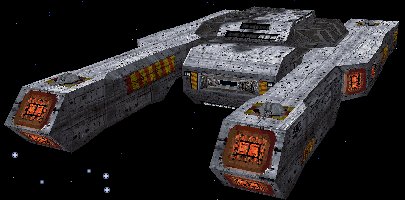
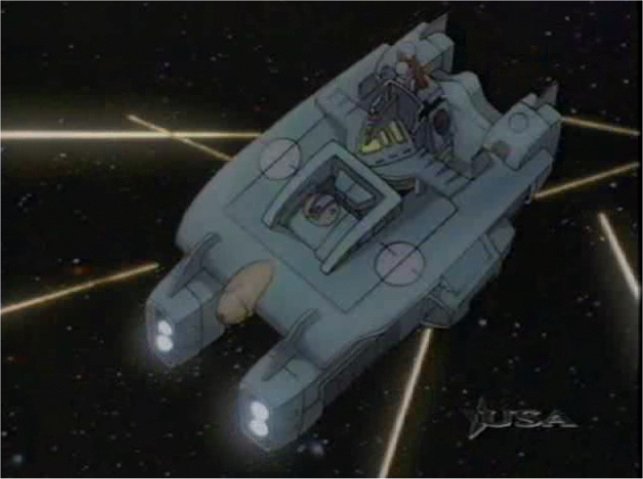
The impetus for comparing Wing Commander to the Battle of Leyte Gulf originates with Fleet Action, where the comparison is made directly by one of the book's characters, Commodore Mike Polowski. As Polowski's 3rd Destroyer Squadron is bearing down on the KIS Craxtha, a surviving Hakaga, he comments to his helm officer:
He looked over at his helm officer and smiled.
"Just like the Battle of Leyte Gulf," Mike said.
"I was thinking that," the helm replied "One of my illustrious ancestors commanded a cruiser there. We should have won that day."
Mike nodded.
The destroyers fire their torpedoes and the TCS Roger Young explodes. Polowski realizes there is no hope of survival and orders his ship to follow in the torpedoes and ram the carrier. He asks the crew to abandon ship, but knows the helm and fire control officers must stay aboard:
He looked over at his helm and fire control officers.
"I hate to ask this of you two."
"It's all right, sir," the helm officer said. "This time the family wants to be on the winning side."
The hit cripples the carrier, knocking it out of the fight, embarassing Thrakhath pesonally and forcing him limp back to Kilrathi space without recovering many of his fighters. It's one of the battle's great moment, a final self sacrifice that exemplifies the depth of humanity's dedication to protecting the homeworlds. But the question remains... who was Polowski's helm officer's ancestor?

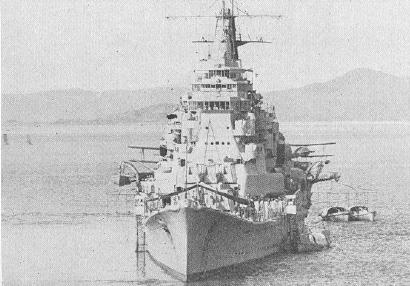
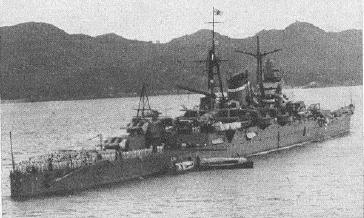
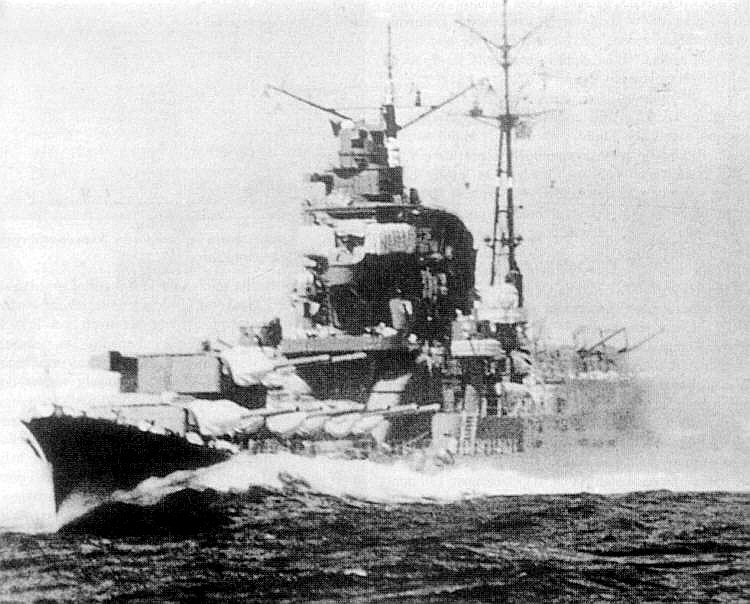
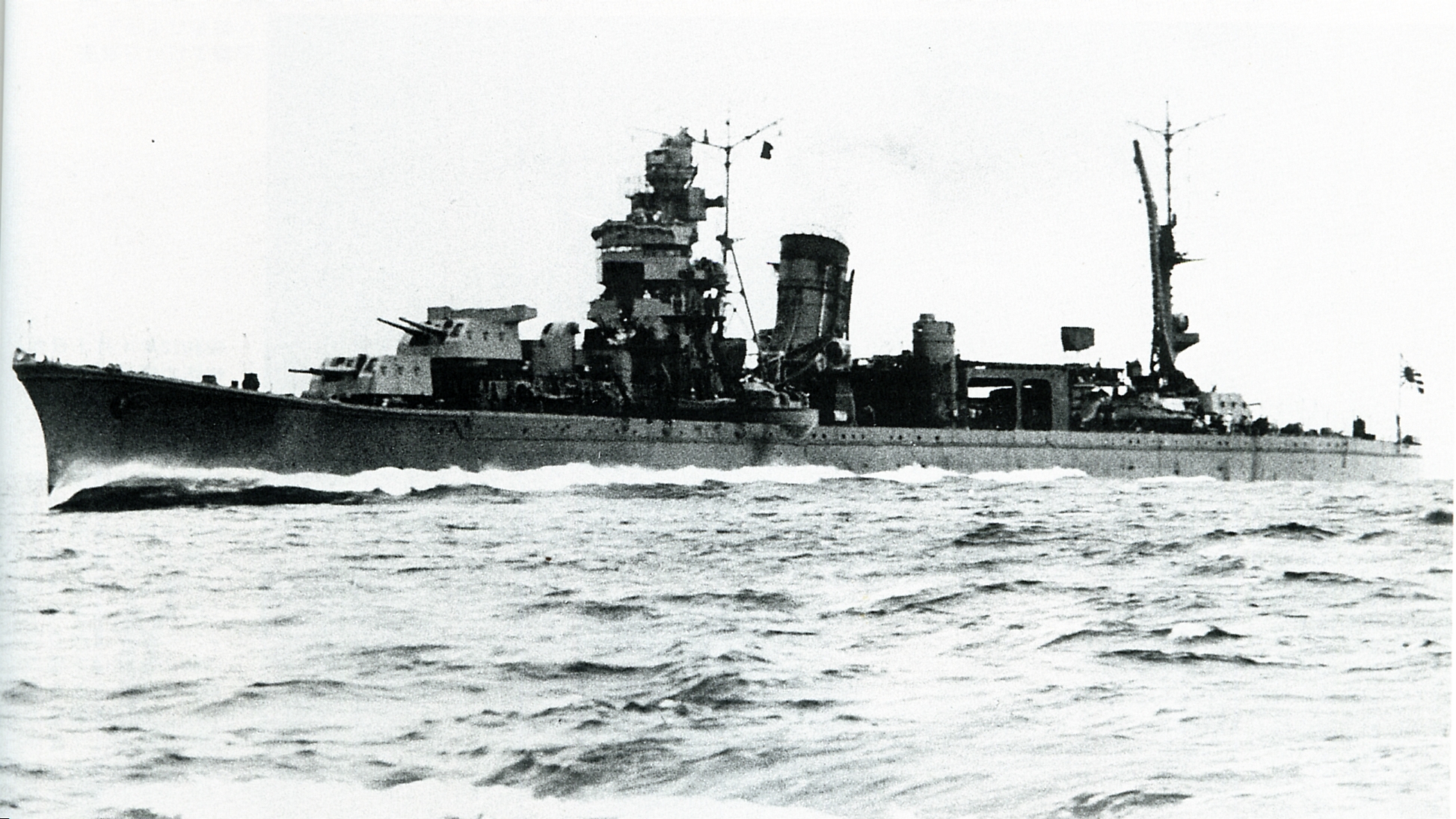
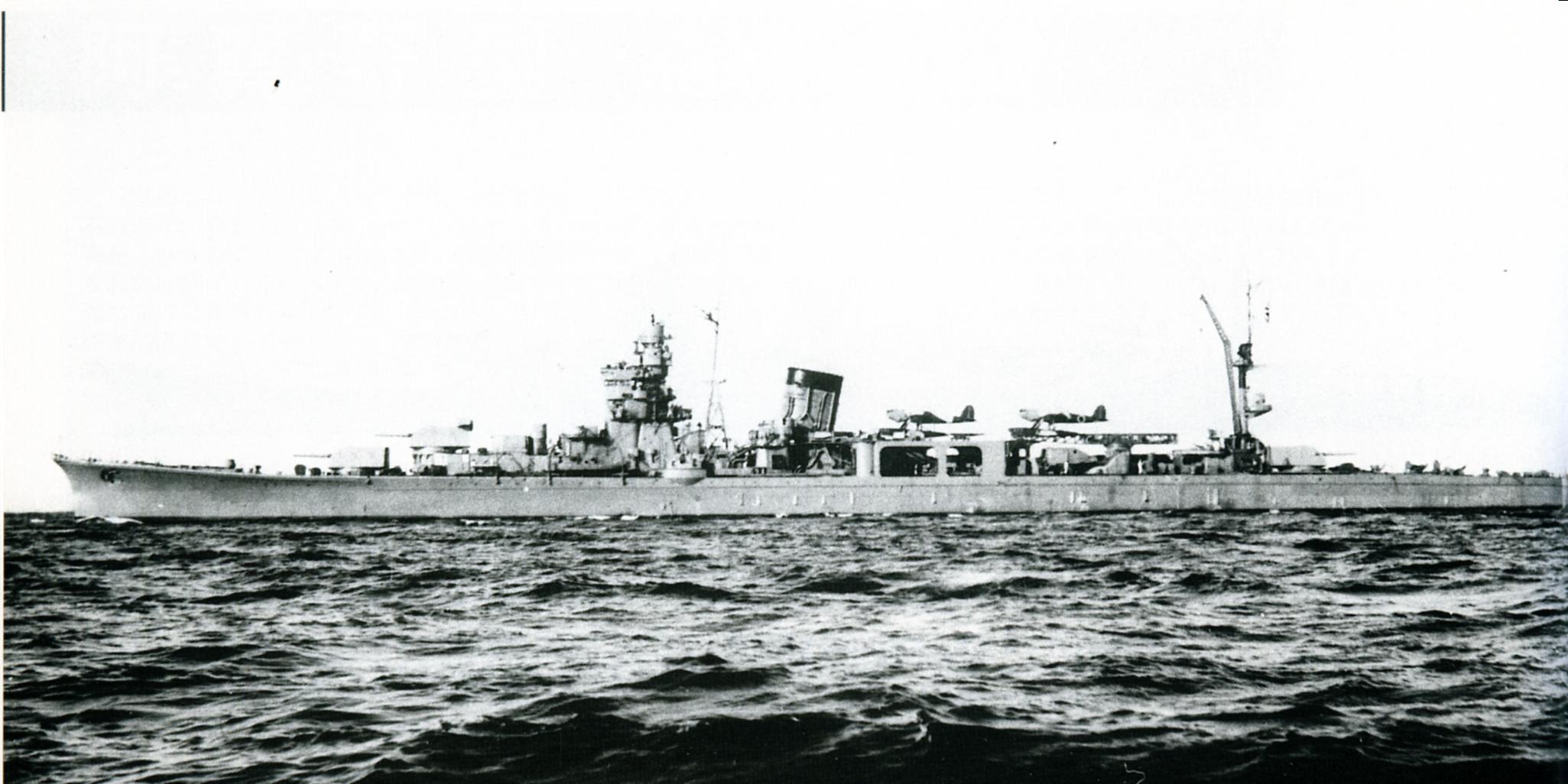
The Japanese order of battle at Leyte Gulf included twenty cruisers, but only eight took part in the Battle off Samar. Polowski an the helm officer are clearly talking about Samar, the equivalent to their situation and the only part of the battle that the Japanese "should have" won. The possibilities are:

The Haguro, a Myōkō-class heavy cruiser commanded by Kaju Sugiura. The ship survived the battle, but as sunk on May 16, 1945 by the Royal Navy during the Battle of the Malacca Strait. Sugiura, still in command, did not survive that battle.
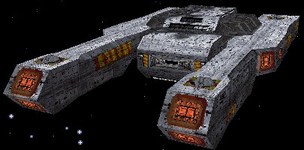


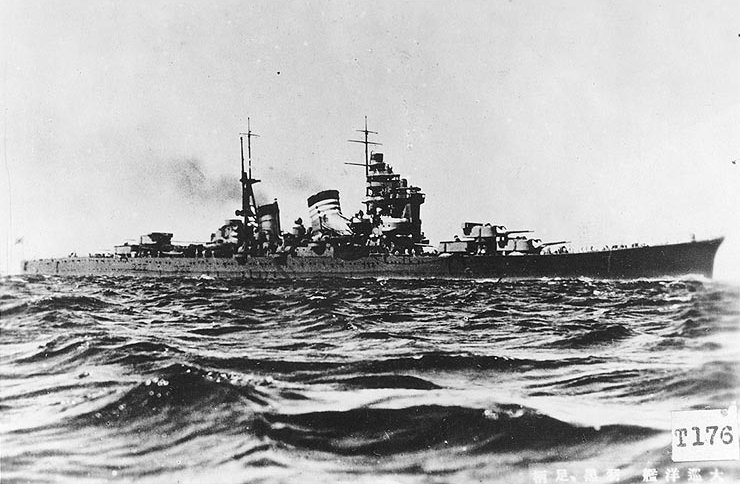
The Chōkai, a Takao-class heavy cruiser commanded by Iyo Tanaka. Chōkai was torpedoed by an American destroyer escort during the battle and then set ablaze by dive bombers. Tanaka was among those rescued by a destroyer, but then died when the rescuing ship itself was sunk two days later.
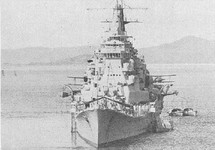
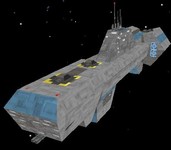


The Kumano, a Mogami-class heavy cruiser commanded by Soichiro Hitomi. Kumano suffered heavy damage during the battle but ultimtely survived. She was sunk by aircraft a month later while undergoing repairs at Santa Cruz.
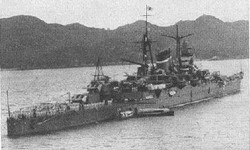


The Suzuya, a Mogami-class heavy cruiser commanded by Masao Teraoka. Suzuya was sunk by American carrier planes, but Teroaka survived the battle.
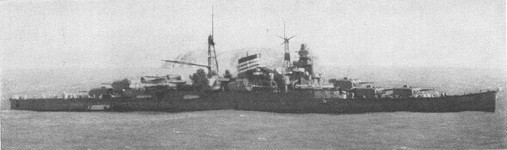


The Tone, a Tone-class heavy cruiser commanded by Haruo Mayuzumi. Tone survived damage from air attacks during the battle and became a training ship. She was sunk in May, 1945.
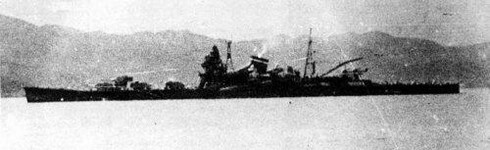
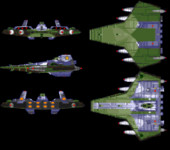


The Chikuma, a Tone-class heavy cruiser commanded by Saiji Norimitsu. Chikuma was sunk by Avenger torpedo bombers during the battle.
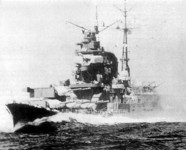
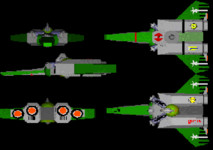


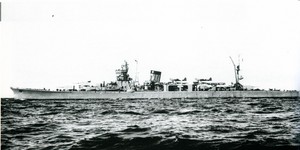
The Noshiro, an Agano-class light cruiser commanded by Sueyoshi Kajiwara. Noshiro was heavily damaged in air attacks and scuttled after the battle. Kajiwara was rescued and survived the sinking.
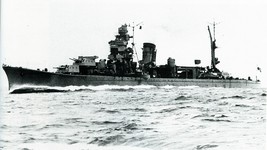


The Yahagi, an Agano-class light cruiser commanded by Matake Yoshimura. Yahagi survived the battle without damage and was ultimately sunk during the final attacks on the Yamato the next year.


--
Original update published on October 25, 2011
 
Last edited by a moderator:
Just wanted to say that I've really enjoyed this new string of news updates and appreciate the hard work and presentation that goes into them! Next time I have a chance I'll have to photograph my collection of 1/700 scale warships. I'm no historian - but DID do the Battle of Midway for my honors in history thesis in high school! I recreated each major vessel in the battle to illustrate on a table the overwhelming odds the Americans faced that day for the presentation.

As an aside, I pretty much went blind airbrushing and detailing the various airwings - ever try and decal a 1/700 Zeke? Of course, I was an idiot, and didn't want just one or two fighters per deck - they just HAD to be full flight decks. Ugh

Thanks again all!
 
In December I'm going down to New Orleans for the International Conference on World War II - Pearl Harbor to Guadalcanal. I haven't been to the WW2 museum before so it should be a good time!

As an aside, I pretty much went blind airbrushing and detailing the various airwings - ever try and decal a 1/700 Zeke? Of course, I was an idiot, and didn't want just one or two fighters per deck - they just HAD to be full flight decks. Ugh

Thanks again all!

Well then you should hate the fact that Fuchida lied. There were only a handful of fighters on the deck of the Akagi when the 10:20 - 10:25 am dive bomber attack took place. The strike force was in the hangars at the time of the attack. So Fuchida's claim that Kido Butai was only minutes away from launching its own strike does not hold up. Parshall and Tully do a fantastic job of supporting this argument in their book Shattered Sword. They look at deck cycle times (and photographs of the carriers at certain times of the morning) and show that it was impossible to have had the decks spotted, planes armed and warmed up, given the cycle of CAP rotation and the time it takes to bring planes up from the hangar.
 
Parshall and Tully do a fantastic job of supporting this argument in their book Shattered Sword.

I've heard much about this book - I notice Parshall is one of the speakers that is lined up for the conference you mentioned. I think I'm going to have to add this to my list for the winter. I confess that at the time of the presentation my primary goal was simply to show the opposing orders of battle to drive home the point that there was a large delta in tonnage; as such, I wasn't necessarily depicting the fleets at any one moment in time. I know that at the time of the Dauntless attack Nagumo had already changed his mind at least once (2x?) about what load-out the next strike was to be armed with; add to this contemporary Japanese carrier doctrine (which to my understanding dictated that any rearming/reloading was to happen below decks) and your scenario seems the correct one. This also helps reinforce why the ensuing internal explosions were so severe and why it was impossible for the damage control crews to save the burning carriers (among a whole host of other design and doctrinal flaws.)

Happy 1000 to me! :D
 
Well then you should hate the fact that Fuchida lied. There were only a handful of fighters on the deck of the Akagi when the 10:20 - 10:25 am dive bomber attack took place. The strike force was in the hangars at the time of the attack. So Fuchida's claim that Kido Butai was only minutes away from launching its own strike does not hold up. Parshall and Tully do a fantastic job of supporting this argument in their book Shattered Sword. They look at deck cycle times (and photographs of the carriers at certain times of the morning) and show that it was impossible to have had the decks spotted, planes armed and warmed up, given the cycle of CAP rotation and the time it takes to bring planes up from the hangar.
I read Fuchida's book a couple of years back, so I don't remember for sure, but didn't Fuchida actually write that the strike force was in the hangar, not on the deck? I mean, that was the crux of the whole problem, wasn't it - bombs penetrating the wooden flight deck and exploding in the hangars just at the moment when the place was filled with planes being rearmed, ordnance all over the place, etc.?

That having been said - if there is a conflict of views between Fuchida and modern historians, I'll take Fuchida's word over this Parshall and Tully any day. A lot has been written about WWII in the past sixty years, and anyone who sets out to publish, in 2005, a book about the Battle of Midway, has to either write something really extraordinary, come up with a really extraordinary angle, or present some really extraordinary revisionist claim. "Fuchida lied, and average CAP rotation cycles in the Japanese fleet prove it" is definitely an example of that third category - they're using circumstancial evidence to disprove eyewitness accounts. It is of course easily conceivable that Fuchida would be lying, but for historians sixty years after the fact to claim this, they would really need a huge barrel-load of evidence to prove this. The fact is, while some things are better seen from a distance, the details are always best seen up-close - so it's just as easily conceivable to me that these guys (Parshall & Tully), however convinced they may be about their claims, are just plain wrong because they're looking from a sixty-year perspective.
 
I read Fuchida's book a couple of years back, so I don't remember for sure, but didn't Fuchida actually write that the strike force was in the hangar, not on the deck? I mean, that was the crux of the whole problem, wasn't it - bombs penetrating the wooden flight deck and exploding in the hangars just at the moment when the place was filled with planes being rearmed, ordnance all over the place, etc.?

No, Fuchida specifically states the Japanese counterstrike was mere minutes away from launch. We can prove that it was not by looking at the flight deck operations log to name one source. You can't be landing and launching CAP packages when you deck is stacked with planes ready for a strike.

That having been said - if there is a conflict of views between Fuchida and modern historians, I'll take Fuchida's word over this Parshall and Tully any day. A lot has been written about WWII in the past sixty years, and anyone who sets out to publish, in 2005, a book about the Battle of Midway, has to either write something really extraordinary, come up with a really extraordinary angle, or present some really extraordinary revisionist claim. "Fuchida lied, and average CAP rotation cycles in the Japanese fleet prove it" is definitely an example of that third category - they're using circumstancial evidence to disprove eyewitness accounts. It is of course easily conceivable that Fuchida would be lying, but for historians sixty years after the fact to claim this, they would really need a huge barrel-load of evidence to prove this. The fact is, while some things are better seen from a distance, the details are always best seen up-close - so it's just as easily conceivable to me that these guys (Parshall & Tully), however convinced they may be about their claims, are just plain wrong because they're looking from a sixty-year perspective.

They use more than that. We have pictures of the flight decks less than 30 minutes before the dive bomber attack. One crucial thing that is noticed in those images. No planes on deck. We also have the logs of the flight decks. They were launching CAP patrols all morning. You cannot launch and recovery planes when your deck is prepped for a launch. Fuchida's exact claim is that he watched the first plane take off as the bombs fell....he neglects to mention it wasn't part of the strike package, but instead a Zero launching to augment the CAP. It takes the IJN roughly 45 minutes to spot a deck in 1942. Given the times, the pictures we have, other Japanese sources (the Nagumo Report contradicts Fuchida's own observations...as well as the authoritative official Japanese history Senshi Shoho support Parshall and Tully), all support the thesis that the strike group was in the hangars and was not even being brought on deck when the dive bombers struck at 1020 am.

So they actually do have "a huge barrel-load of evidence to prove this." The Japanese themselves have long reached the conclusion that Fuchida lied in his book. Parshall and Tully did a great job of synthesizing all those narratives into their book.

This is also not the only thing Fuchida stretched the truth about. The myth of the Pearl Harbor 3rd strike also emerges from his words. Another thing that was debunked by Japanese historians as it is also found in their official history, Senshi Shoho.
 
Back
Top